

About this report
Executive Summary
The 2024 Queensland State of the Environment Report (QSoE) is the ninth iteration, which continues the regular assessment of the state and condition of Queensland’s environment, as well as the pressures and trends that impact it. The latest report covers a four-year period to 30 June 2024 of the former Queensland Government and evaluates 124 indicators related to extent and condition (state) as well as pressures.
Its publication fulfills the legislative requirements of the Environmental Protection Act 1994 and the Coastal Protection and Management Act 1995 and provides an evaluation of the extent, condition, and significant trends and pressures affecting Queensland’s environment. The QSoE provides an essential evidence base against which to understand the underlying health and state of Queensland’s environment and the impact it can have on the lifestyle, economy and future of Queenslanders.
Its findings show that while progress has been made towards delivering improved management responses across the report’s themes of Biodiversity, Heritage, Pollution, Climate and Liveability, overall Queensland’s relatively intact and globally renowned environment and biodiversity, is being subject to pressures, for which all Queenslanders have an interest in better managing into the future. For example, the number of threatened fauna species has increased; the extent and rate of change of remnant native vegetation is worsening; and the proportion of household waste diverted from landfill continues to worsen.
The QSoE 2024 is the result of a collaborative endeavour, with experts from various Queensland Government agencies providing a detailed analysis. Their extensive contributions have been instrumental in this publication.
What is State of the Environment Reporting
‘State of the Environment’ reporting is the internationally recognised approach to assessing environmental performance. Queensland State of the Environment Reports are released at least every 4 years. The report presents a comprehensive picture measuring the extent and condition of Queensland’s environmental assets, the pressures facing these assets and the actions being taken to protect, maintain and restore them. The report meets the legislative requirement of both the Environmental Protection Act 1994 and the Coastal Protection and Management Act 1995.
The Queensland State of the Environment Report 2024 is the fourth report in a web-based format and the ninth report since 1990. Previous reports can be found here. The website is accompanied by the Queensland State of the Environment 2024 Summary which contains the report’s key facts and messages.
Queensland adopts the internationally accepted Organisation for Economic Cooperation and Development (OECD) pressure-state-response approach to state of the environment reporting.
The Australian Government and the Department of Climate Change, Energy, the Environment and Water adopts a similar approach, the drivers-pressures-state-impact-response (DPSIR) framework.
How to use this report
Structure and linkages
The Queensland State of the Environment Report 2024 is organised into five major themes, Biodiversity, Heritage, Pollution, Climate and Liveability. Within each of the themes are 13 sub-themes, covering key messages, key facts, indicators (state/pressure) and management responses and case studies. The five themes are all related and the State of the Environment online system allows for seamless transition from content in one topic to another. It also includes the Great Barrier Reef and Climate Change as cross-cutting themes, which collate information and data from all themes within the report to provide a comprehensive view of these critical topics. Click on the interactive visual below to find what you are looking for.


Indicators and management responses are also mapped to the United Nations Sustainable Development Goal targets and the Global Biodiversity Framework targets to help describe the multiple benefits of a healthy environment to our economy and community, and to help reverse biodiversity loss in Australia and put nature on a path to recovery.
Key Facts
The Key Facts for each sub-theme have been derived through a systematic evaluation of relevant indicators, selecting the most significant data based on their relevance to the core theme, empirical support, and public interest.
Key Fact trends describe the direction of significant change in environmental condition, where this can be differentiated from natural background variation. The trend is judged over the four years of the reporting period however longer-term data is also considered.
| Indicator Trend | Symbol | Interpretation |
|---|---|---|
| Getting better |  | The trend in the 'state' or 'pressure' for the indicator is generally considered to be improving. |
| Stable or no change |  | No significant change in 'state' or 'pressure' is evident. |
| Getting worse | 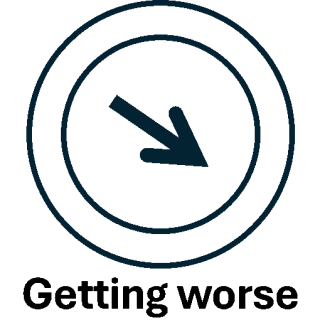 | The trend in 'state' or 'pressure' for the indicator is generally considered to be declining. |
| Not applicable | 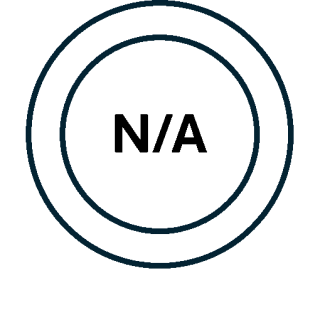 | No comparison is possible from last reporting period. This may be due to a change in method for data collection or that the nature of the indicator does not allow for comparison. |
Management Responses
Management response are the actions or initiatives undertaken by or for the Queensland Government to protect, maintain and restore environmental assets, as well as those that prevent, mitigate or adapt to changes in the environment. They are generally developed in relations to the observed or anticipated pressures and impacts, or the state of the environment. They act in a multitude of ways, either individually or more often in concert with one another to bring about environmental change.
Case Studies
Case studies are a detailed examination of a specific projects or programs being undertaken by or for the Queensland government.
- Explore the status and trends in Queensland's environmental asset with the Interactive Dashboard. View the data how you would like to see it.

Educational Resource
The Queensland State of the Environment report is an evidence-based resource. It can be used to inform teaching across all ages of the Australian Curriculum. In particular, it can support teaching of the cross-curriculum priorities of 'Sustainability' and 'Aboriginal and Torres Strait Islander Histories and Cultures'. A Queensland State of the Environment PowerPoint slide deck is being developed to support student understanding and navigation of the report’s content.
Contributors
Working closely with subject matter experts, content is drawn mainly from Queensland Government programs. Preparation of this report has relied on the contribution of many Queensland Government entities, the Reef Authority, and from the Department of the Environment, Tourism, Science and Innovation (DETSI). DETSI is grateful for the assistance of those who contributed the majority of content, particularly:
- Department of Primary Industries
- Department of Transport and Main Roads
- Queensland Fire Department
- Department of State Development, Infrastructure and Planning
- Department of Women, Aboriginal and Torres Strait Islander Partnerships and Multiculturalism
- Queensland Treasury
- Department of Natural Resources and Mines, Manufacturing and Regional and Rural Development
- Queensland Reconstruction Authority
- Wet Tropics Management Authority
- Reef Authority (Great Barrier Reef Marine Park Authority)


Read the Summary for a snapshot of the key facts taken from the detailed content online.

Read the Queensland State of the Environment 2024 Summary (PDF, 9.0 MB).