





Greenhouse gas emissions
Key Messages
-
A greenhouse gas is a gas that traps heat in the atmosphere, causing climate change. Increasing levels of greenhouse gases in the atmosphere results in changes in the global climate system. Reducing the amount and rate of greenhouse gas emissions released into the atmosphere is important for the overall health of the environment and prosperity of people.
-
Greenhouse gases like carbon dioxide (CO₂), methane (CH₄), and nitrous oxide (N₂O) trap heat in the Earth's atmosphere, leading to global warming and climate-related impacts, such as rising sea levels, extreme weather events, and biodiversity loss. Accurate measurement helps to track emission trends, assess the effectiveness of climate policies, and ensure consistency with international agreements like the Paris Agreement.
Key Facts
State
- Total annual greenhouse gas emissions
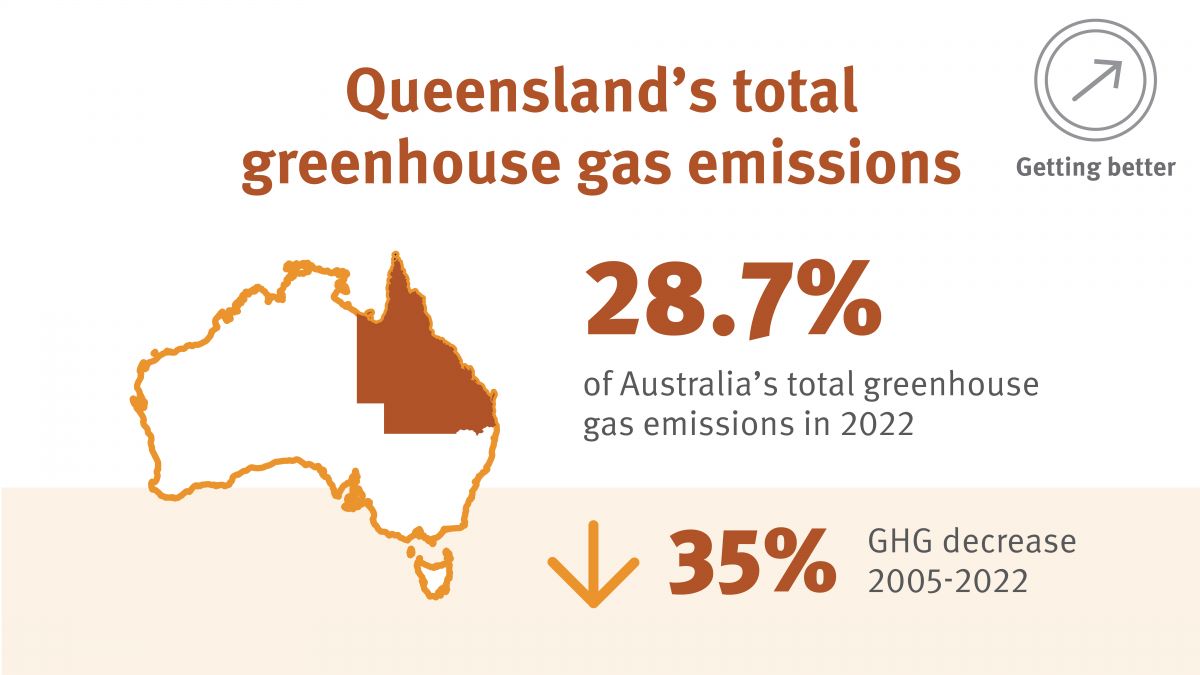
In 2022, Queensland’s total greenhouse gas emissions were 124.1 million tonnes of carbon dioxide equivalent (MtCO2e), including emissions from the land use, land use change and forestry sector. Queensland’s total emissions made up 28.7% of Australia’s total. Between 2005 and 2022, Queensland's emissions decreased by 35%.
- Stationary and industrial energy sector greenhouse gas emissions
In Queensland in 2022, the stationary and industrial energy sector was the second highest emitter after public electricity. The stationary and industrial energy sector contributed 25.8 million tonnes of carbon dioxide equivalent (MtCO2e) or 20.8% of total emissions. Between 2005 and 2022, emissions increased by 52% due to strong growth in mining and exports and long-term growth in the population and economic activity.
- Transport sector greenhouse gas emissions
In 2022, emissions from the transport sector contributed 21.5 million tonnes of carbon dioxide equivalent (MtCO2e) or 17.3% of Queensland’s total emissions. Emissions increased by 20.2% between 2005 and 2022 due to population and commercial activity growth and the importance of motor vehicles for passengers and freight in Queensland.
- Agriculture sector greenhouse gas emissions
In 2022, emissions from the agricultural sector contributed 21 million tonnes of carbon dioxide equivalent (MtCO2e) or 16.9% of total emissions in Queensland.
Emissions decreased by 6.7% between 2005 and 2022. The level of emissions typically varies in response to climatic and market conditions but has otherwise remained relatively stable compared with other sectors.
- Land use, land use change and forestry sector greenhouse gas emissions
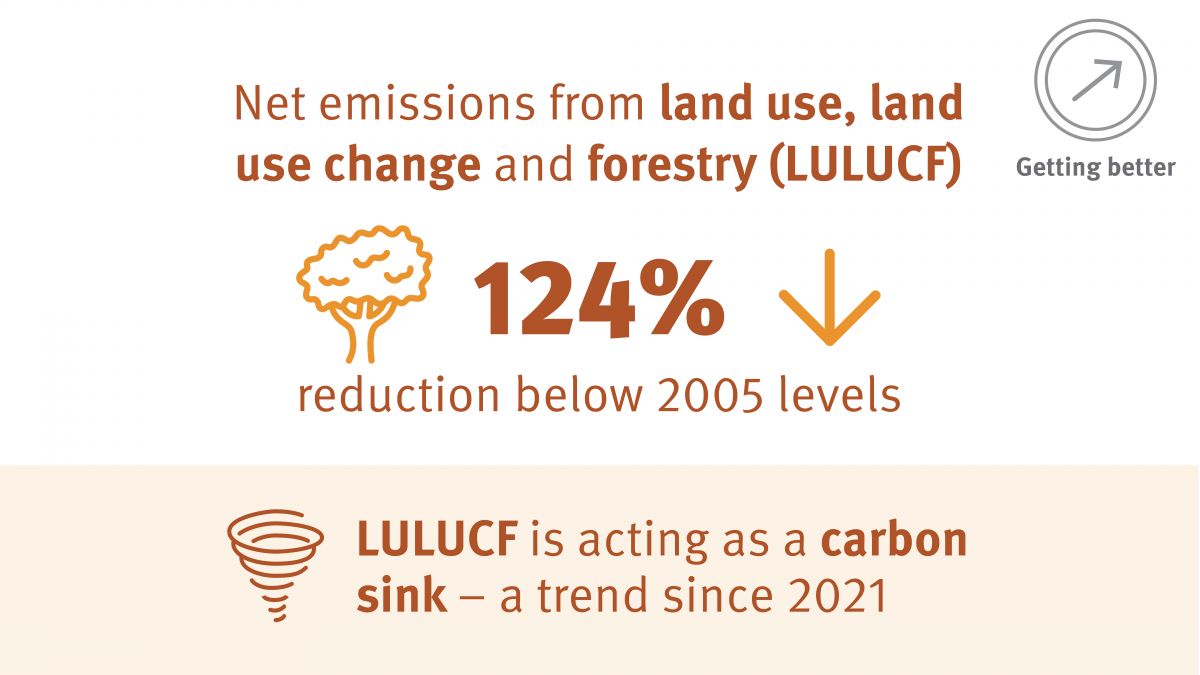
In 2022, net emissions from land use, land use change and forestry (LULUCF) showed a 124% reduction below 2005 levels to -15.9 MtCO2-e. In Queensland, LULUCF is acting as a carbon sink—a trend since 2021. Reduced vegetation clearing is the primary driver of LULUCF emissions reductions.
- Industrial processes sector greenhouse gas emissions
In 2022, emissions from the industrial processes sector contributed 5.8 million tonnes of carbon dioxide equivalent or 4.7% of Queensland’s total emissions. The sector’s emissions increased by 13.4% between 2005 and 2022, mainly due to air-conditioning and refrigeration use.
- Fugitive emissions sector greenhouse gas emissions
Fugitive emissions are losses, leaks, and other releases of gases such as methane and carbon dioxide into the atmosphere associated with industries producing natural gas, oil and coal. In 2022, fugitive emissions contributed 18.2 million tonnes of carbon dioxide equivalent, 14.6% of Queensland’s total emissions. Between 2005 and 2022, fugitive emissions increased by 39.9%.
- Waste sector greenhouse gas emissions
In 2022, emissions from the waste sector contributed 2.9 million tonnes of carbon dioxide equivalent or 2.3% of Queensland’s total emissions. Emissions increased by 2.7% between 2005 and 2022. However, landfill emissions have fallen by 1% since 2005 due to increased capture and combustion of landfill gas.