


Marine ecosystems
Key Messages
-
Marine ecosystems are vital to Queensland as they support rich biodiversity, including the Great Barrier Reef, seagrass meadows, and mangrove forests, which provide habitats for fish, turtles, and marine mammals. These ecosystems help maintain water quality by filtering pollutants, protect coastlines from erosion and storm surges, and play a key role in carbon storage, helping to mitigate climate change. They also support tourism, fishing, and Indigenous cultural practices, contributing significantly to Queensland’s economy and heritage. Protecting marine ecosystems ensures the health of marine life, sustainable industries, and the resilience of coastal communities.
-
The Great Barrier Reef is the largest coral reef system in the world, providing habitat for a vast array of marine life, including fish, sea turtles, dugong and coral. It supports biodiversity, helps maintain ocean health, and plays a crucial role in protecting Queensland’s coastline from erosion and storm damage. The reef is also a major economic asset, attracting millions of tourists annually and supporting industries like fishing and tourism. Additionally, it holds deep cultural significance for Indigenous communities. Protecting the Great Barrier Reef is essential for preserving its ecological, economic, and cultural value for future generations.
Key Facts


State
- Condition of marine ecosystem health
Queensland's offshore marine environments are in generally good condition as they are less directly influenced by the water quality of the catchments. Inshore marine areas closer to the coast are impacted by pollutants flowing from catchments and rivers. In general, the Fitzroy and Mackay Whitsunday region's marine ecosystem health is in poor condition while Burdekin and Wet Tropics regions are in moderate condition.
- Marine parks and fish habitat areas
The vast majority of the east coast of Queensland is within one of the state's three marine parks. The total area of highly protected zones in the marine parks is 2,275,000ha or 31%. The Queensland coast also has 72 declared Fish Habitat Areas, protecting approximately 1.2 million hectares of high-quality fish habitats.
- Key fish stocks
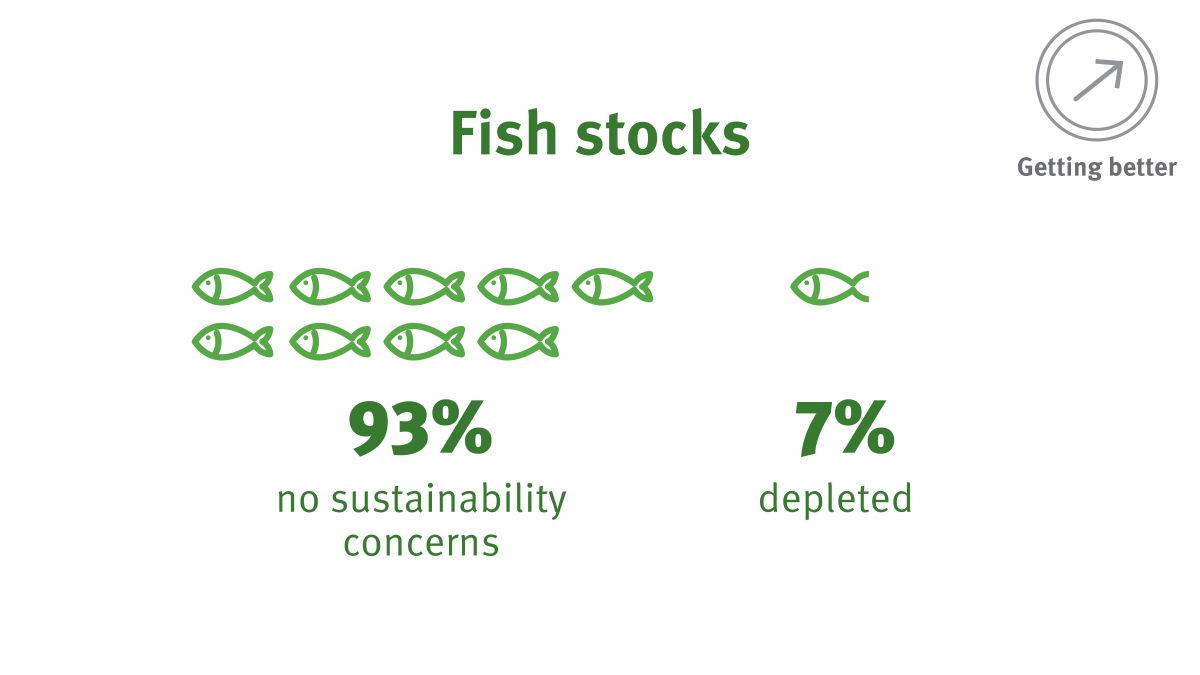
Of Queensland’s key fish stocks: 93% is considered to have no sustainability concerns and 7% is depleted/depleting and have rebuilding strategies in place.
- Condition of ecological processes on the Great Barrier Reef
Since 2019, most ecological processes on the Great Barrier Reef have remained generally stable. Reef building continues to deteriorate due to the impact of ocean acidification on calcification rates. Trends in recruitment are variable, but declines have been observed in some populations, including dugongs, turtles, and some coral species.
Pressure
- Recreational fishing catch and participation
Recreational fishing is a popular activity across the state, with about 19% of Queenslanders aged over five going fishing. Recreational fishers harvest approximately six million fish and catch and release another 7.6 million a year.
- Pressures affecting marine ecosystems
Pressures affecting marine ecosystems within the Great Barrier Reef Catchments are catchment and coastal development, extreme weather events and climate change. In South East Queensland, the major pressures affecting marine ecosystem health are sediment and the long-term loss of riparian or riverbank vegetation, exacerbated by climate change and population growth.
- Climate change and the Great Barrier Reef
Of the four main factors influencing the Great Barrier Reef, climate change is assessed as having the highest negative impact. Its impacts on natural and heritage values are already apparent and expected to increase.
- Coastal development and the Great Barrier Reef
Coastal development has a high impact on ecological and heritage values. The legacy effects of past coastal development, primarily agricultural land uses, barriers to flow, urban development and mining, still significantly affect coastal ecosystems adjacent to the Great Barrier Reef. Development is anticipated to increase in line with a growing population, aquaculture is projected to increase within the catchment, and existing and additional modifications to coastal ecosystems and barriers to flow will encroach further upon natural and heritage values in the future.
- Direct use and the Great Barrier Reef
The Great Barrier Reef continues to provide significant economic and social benefits. The impacts of most direct use are localised but add up across the Region. Cumulative impacts from direct use and other pressures (including climate change) affect ecosystem resilience and Reef-dependent industries and communities.
- Land-based runoff and the Great Barrier Reef
The Great Barrier Reef is vulnerable to exposure to pollutants (mainly sediments, nutrients and pesticides) transported in land-based runoff from unsustainable agricultural land management practices. Land-based runoff remains the most significant contributor to reduced water quality.
- Outbreaks of crown-of-thorns starfish
Crown-of-thorns starfish outbreaks continue to affect reefs, but control efforts have reduced impacts at some scales. The outbreaks are graded as poor, improving from the very poor rating in 2019.
- Invasive non-native flora and fauna species identified in marine ecosystems
Non-native marine flora and fauna species (marine pests) can damage Queensland’s biodiversity. The best way to minimise the impact of marine pests is to prevent their entry into our marine ecosystems or detect them quickly.