World
Key Messages
-
World Heritage sites are places that have Outstanding Universal Value that transcend the significance they hold for a particular nation.
The World Heritage Convention aims to promote cooperation among nations to protect heritage around the world that is of such Outstanding Universal Value that its conservation is important for current and future generations.
The Queensland First Nations World Heritage Strategy was co-designed and developed with First Nations people and seeks to centre Country and people across all aspects of World Heritage. The strategy demonstrates how the Queensland Government can empower First Nations peoples and local communities to better identify, protect, conserve, present and transmit the irreplaceable values of World Heritage areas to future generations.
-
The Great Barrier Reef became the first coral reef ecosystem to be listed on the World Heritage List in 1981. Its World Heritage listing recognises the reef’s importance to the global community and the need for its protection and preservation for future generations. It was listed for all 4 natural heritage criteria.
There are approximately 70 First Nation groups whose sea country includes the Great Barrier Reef. Evidence of First Nations people’s relationship to sea Country demonstrates an ongoing connection to the Great Barrier Reef region for over 60,000 years.
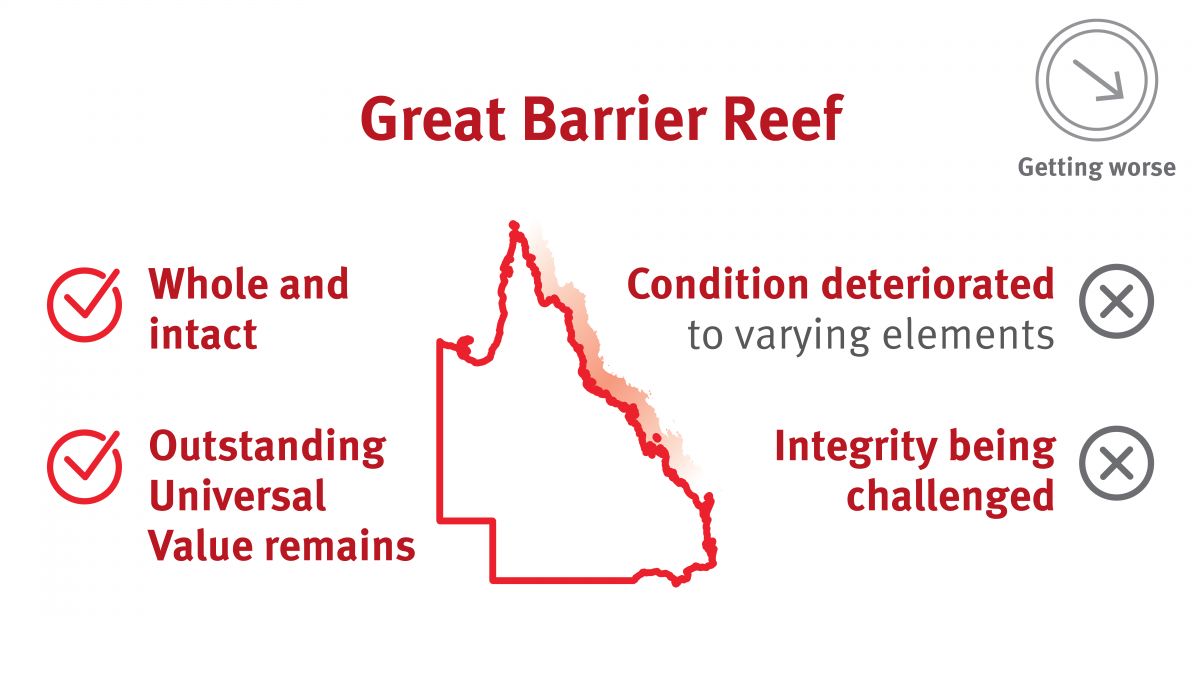
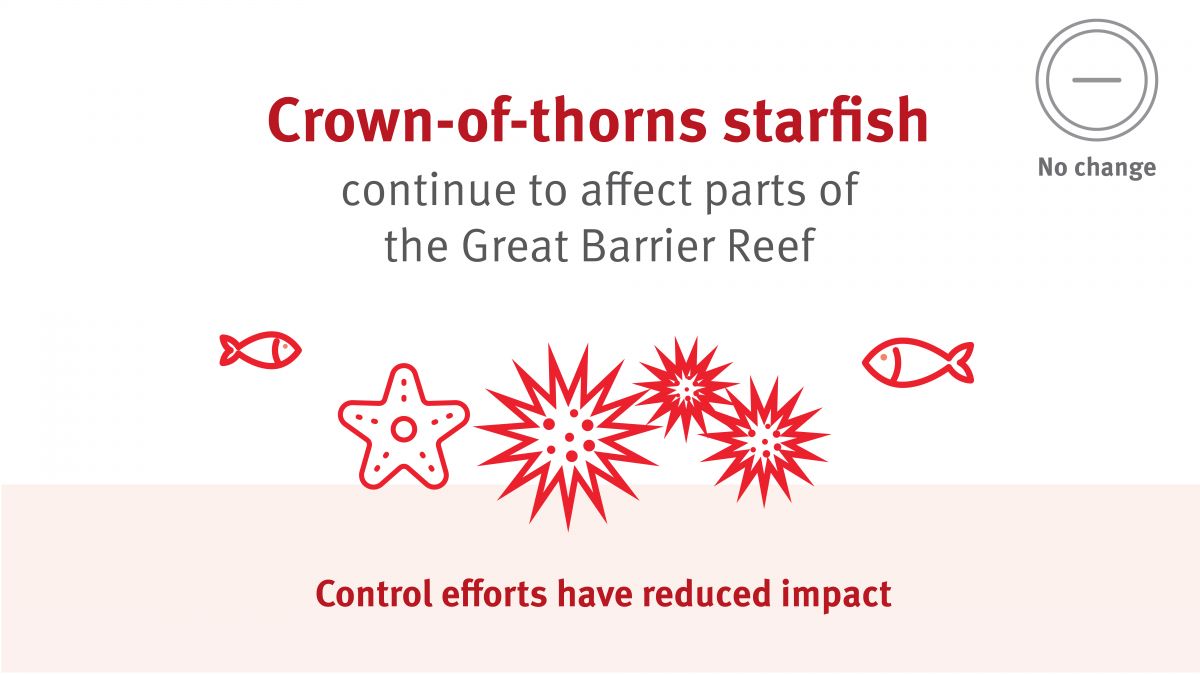
Great Barrier Reef - Indicators
-
The Wet Tropics of Queensland was World Heritage listed in 1988. It is a major centre of biological diversity and the only habitat for many endemic and threatened species.
Although small in area, the Wet Tropics of Queensland sustain an extraordinary proportion of Australia’s biodiversity. Many species have very restricted distributions which heightens their vulnerability to environmental pressures.
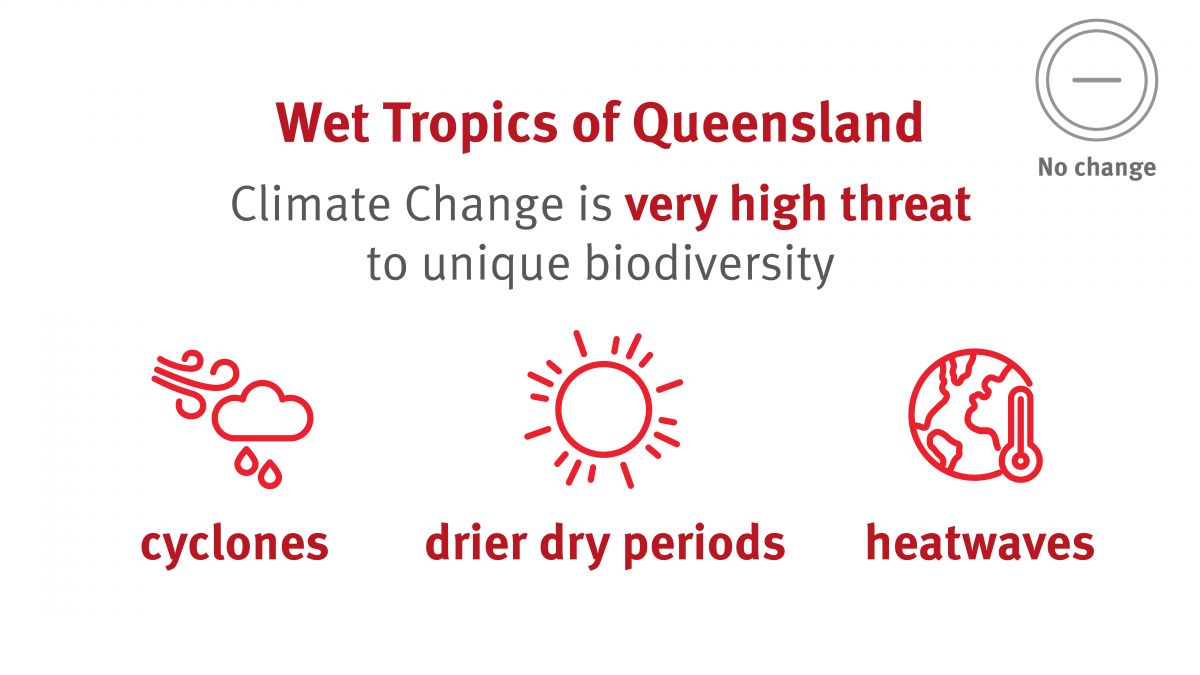
Wet Tropics of Queensland - Indicators
-
The Riversleigh section of the Australian Fossil Mammal Sites is one of the most significant fossil deposits in the world, and the richest known mammal deposit in Australia. The remains of unique Australian prehistoric animals from the last 25 million years have been superbly preserved here in the limestone outcrops.
In 1994 the area's outstanding universal value was recognised internationally when Riversleigh, along with Naracoorte in South Australia, was inscribed on the World Heritage List.
Riversleigh section of the Australian Fossil Mammal Sites - Indicators
-
K’gari—formerly known as Fraser Island—covers 181,851ha including several small islands off its west coast. The world’s largest sand island, also boasting the world’s largest unconfined aquifer on a sand island, it gained World Heritage protection in 1992. K’gari is an outstanding example of ongoing biological, hydrological and geomorphological processes. A place of exceptional beauty, the development of rainforest vegetation on coastal dune systems at the scale found here is unique.
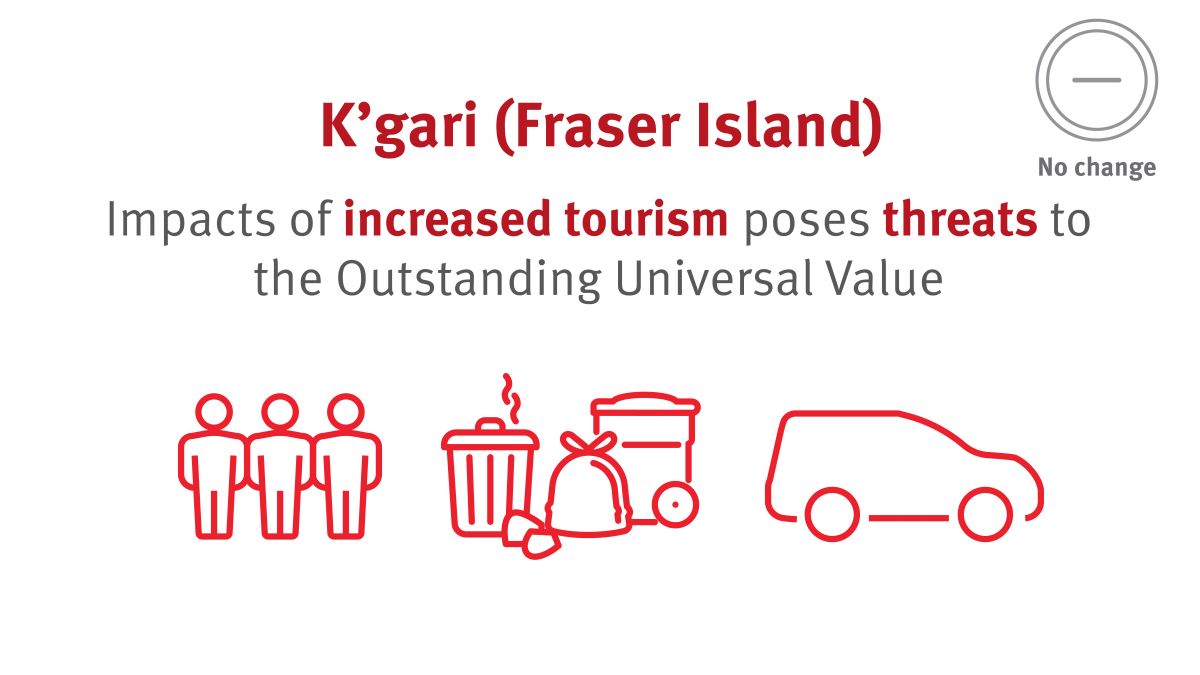
K'gari (Fraser Island) - Indicators
-
The Gondwana Rainforests of Australia comprises the major remaining areas of rainforest in southeast Queensland extending into northeast New South Wales.
The area covers the traditional Country of many First Nations groups and represents outstanding examples of major stages of Earth’s evolutionary history, ongoing geological and biological processes, and exceptional biological diversity. A wide range of plant and animal lineages and communities with ancient origins in Gondwana, many of which are restricted largely or entirely to the Gondwana Rainforests, survive in this collection of reserves. These rainforests were entered on the World Heritage Register in 1994.
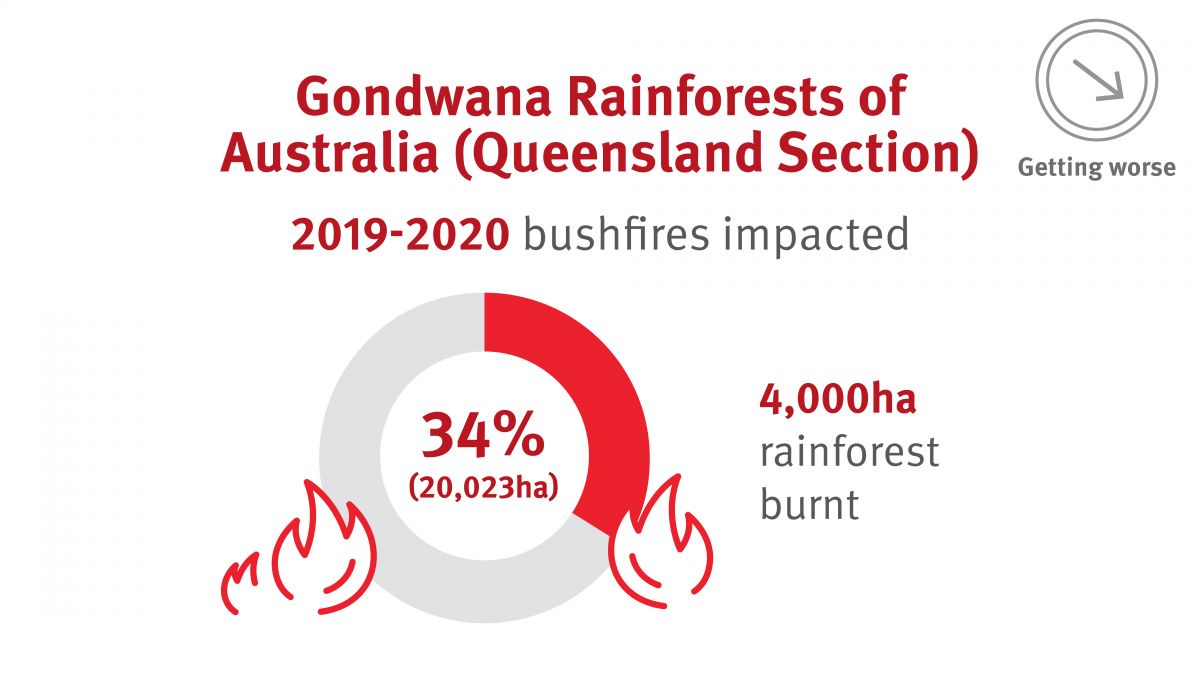
Gondwana Rainforests of Australia - Indicators