


Rural
Key Messages
-
Rural agricultural practices refer to farming activities in sparsely populated areas where open land is used for cultivating crops and raising livestock for food, fibre, and other products. These practices are shaped by the natural environment, including climate, soil type, and resource availability. They are essential to rural economies and livelihoods.
-
Queensland covers a vast land area with diverse climate zones and soil types, from tropical rainforests in the north to arid regions in the west. Understanding these variations is crucial for developing effective planning and management practices that support long-term sustainability and prosperity. With challenges such as climate change, water scarcity, and biodiversity conservation, tailored solutions for each Queensland region are necessary to ensure resilient agricultural practices and the protection of natural resources.
-
Climate is a major consideration for the management of Queensland’s agricultural enterprises. The incidence of year-to-year variability in rainfall, multi-year droughts, temperature extremes and flooding create uncertainty and exacerbates risk for land managers to provide consistency in quality and quantity of produce. The viability of agricultural enterprises and the sustainable use of natural resources depend on best management practice by land managers for their operations.
-
Soil is a critical non-renewable resource which supports ecosystem function that sustains our society. Monitoring soil to detect changes and trends in condition over time informs the effectiveness of land management policies and practices for sustainable development.
Key Facts
State
- Change in ground cover levels
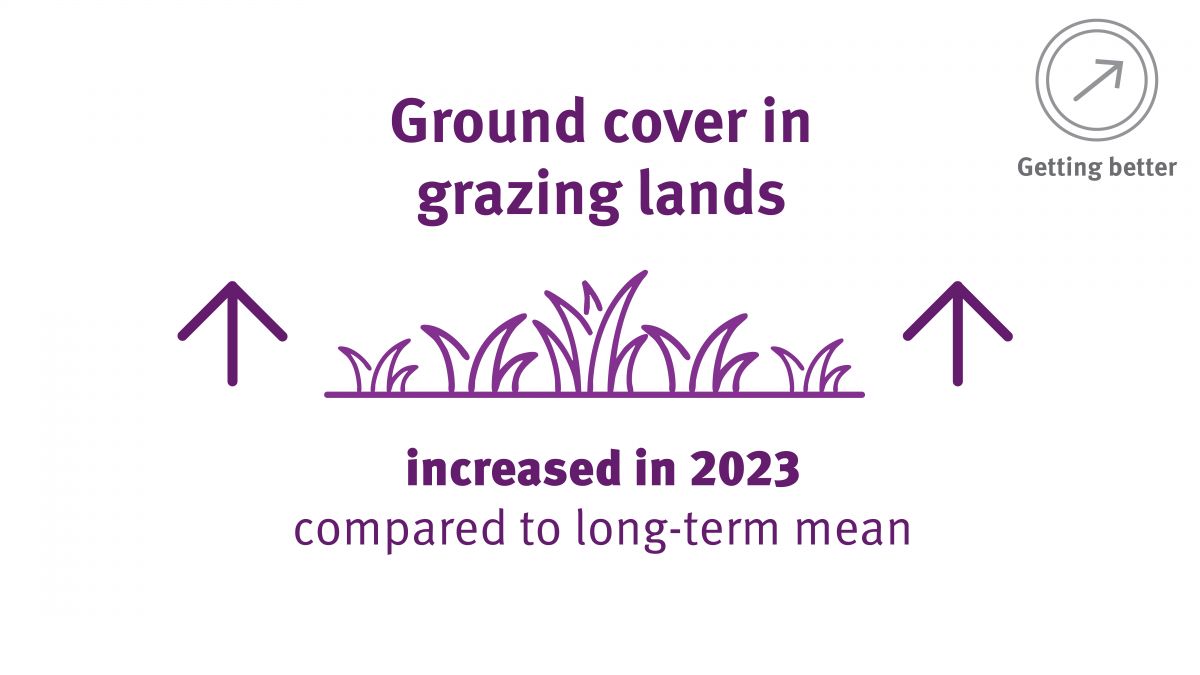
In 2023, ground cover levels in the grazing lands across Queensland was slightly above the long-term mean. This change broadly reflects the above-average annual rainfall across the state in recent years.
- Annual rainfall and pasture growth relative to historical records
Queensland (and most regions of Australia) received above-average rainfall for the three-year period (April 2021 to March 2024). This rainfall has been positive for agriculture and the environment compared to all other three-year periods.
- Soil and land resources availability and capability
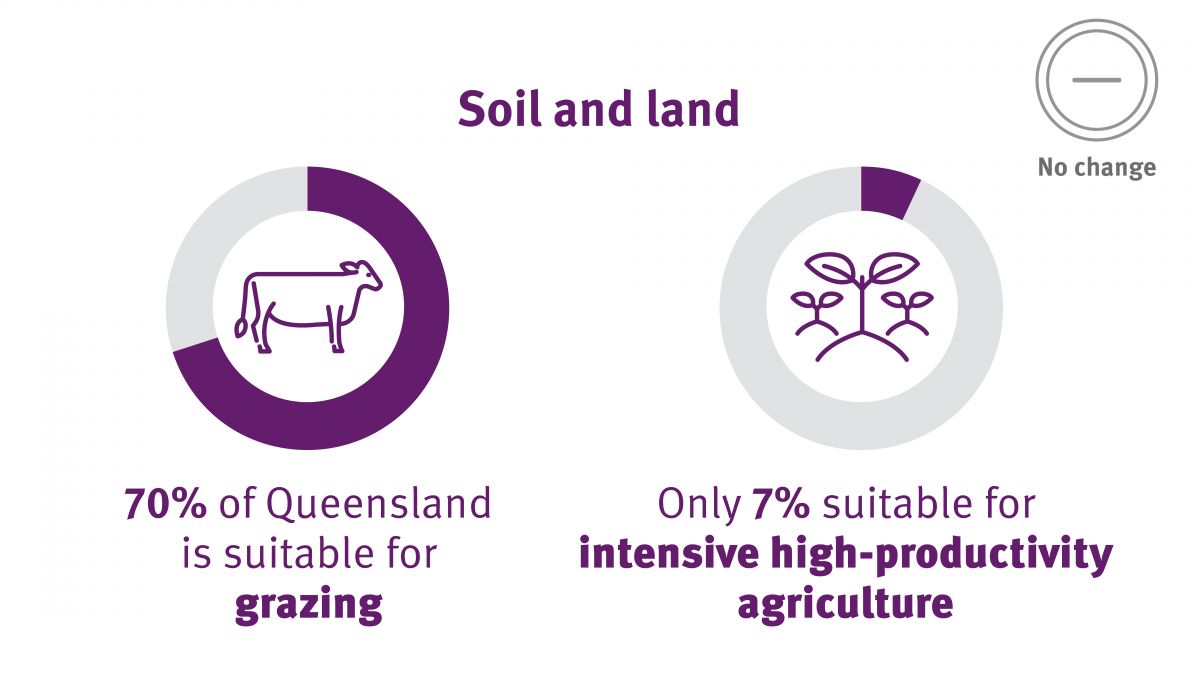
Most of Queensland’s land resource (70% or 1,258,964km2) is suitable for grazing, but only 7% (or 130,599km2) is Class A land suited to intensive high-productivity agriculture. This a general assessment, noting that seasonal rainfall and water availability affect agricultural production in any given year.
Pressure
- Multi-year rainfall and pasture growth periods in Queensland
After a nine-year dry period (April 2012 – March 2021), during the recent three-year period (April 2021 – March 2024), rainfall and pasture growth have been above to well above average (i.e. >70th percentile) and extremely high (i.e. >90th percentile) over large areas of the state.
- Change in available soil and land resources
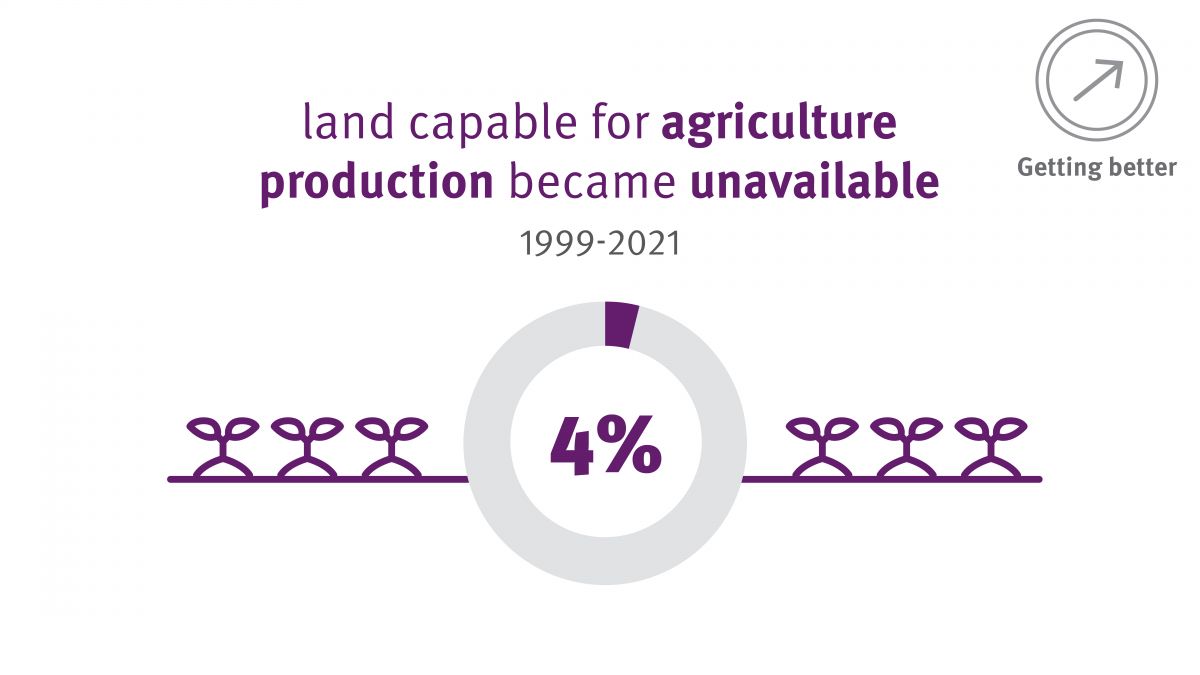
In the 22 years from 1999 to 2021, 3.9% (68,289km2) of the state’s land changed use. About 4% (60,748km2) of the land capable of agricultural production became unavailable for agriculture due to other uses over this period. 69.6% of the change was due to increased land used for conservation and Indigenous management/title.