

Great Barrier Reef Outlook Report 2024
Every five years, the Great Barrier Reef Marine Park Authority prepares the Great Barrier Reef Outlook Report, which examines the Reef’s health, pressures, management and long-term outlook.
Protection and management issues are complex, given the wide range of activities in the Region and its Catchment and the variety of effects these activities can have on the Reef. Effective management of the Great Barrier Reef Region depends on partnerships between:
- government
- Traditional Owners
- industry
- community.
For the Outlook Report 2024, five independent assessors assessed the effectiveness of existing measures to manage and protect the Region’s ecosystem and heritage values.
The following information is drawn from the Great Barrier Reef Outlook Report 2024 ’s ‘Existing protection and management’ chapter. The independent report is available on the Reef Authority website.
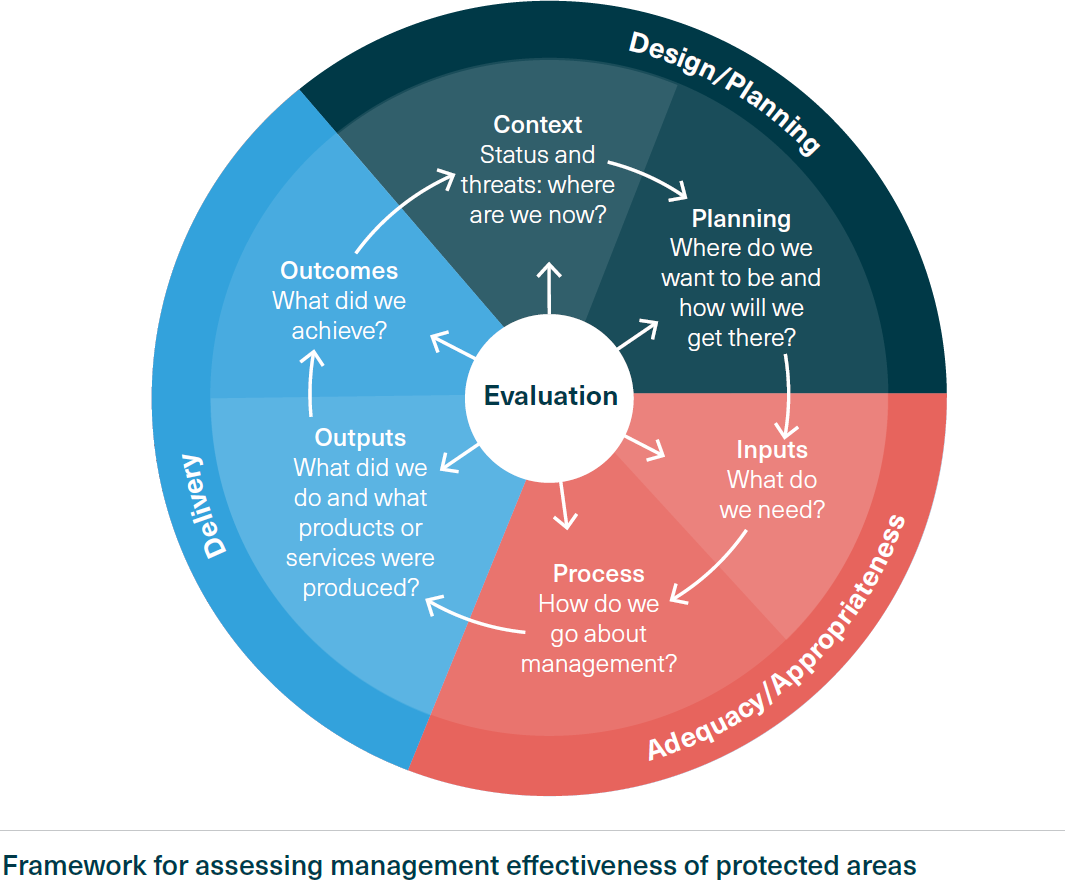
Effective management of the Region is a complex task, given the range of threats and their variation across space and time. The management effectiveness assessment focused on the six elements of the management framework:
- context
- planning
- inputs
- processes
- outputs
- outcomes.
The assessment addressed 14 broad management topics and considered the activities of relevant Australian and Queensland government agencies and other contributing partners.
Framework for assessing management effectiveness of protected areas
Effective management is a closed loop, where issues are considered, plans are made, resources are expanded, processes are followed, and products and services are delivered, all leading to outcomes that address the issues.


Management effectiveness overall
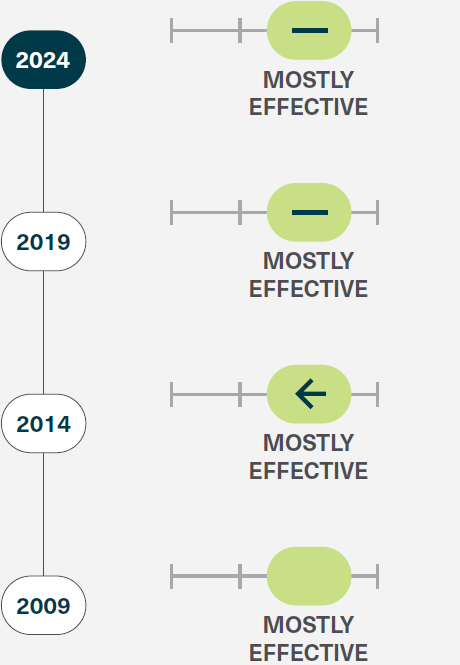
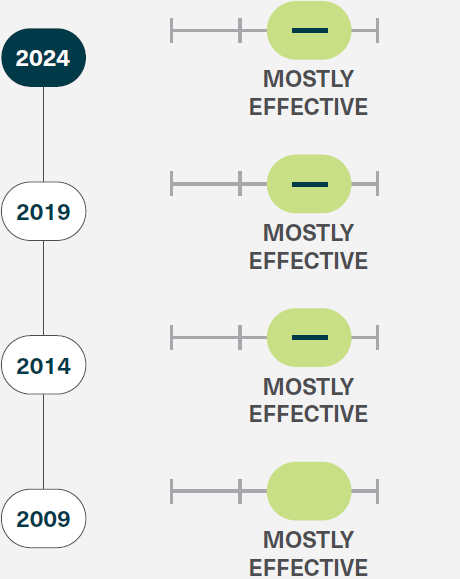
The 2024 assessment found the Region continues to be well-managed overall, with over 80% of the elements across the management topics considered effective or mostly effective. Notable management improvements since 2019 include enhanced funding and planning initiatives through the Reef 2050 Plan and Queensland Sustainable Fisheries Strategy 2017-2027. However, effectiveness declines have occurred for some management aspects since 2019.
Managing direct use
Direct use of the Region is generally well-managed, likely due to the lower complexity involved (compared with managing external factors) and the maturity of the management systems.
- Well-resourced planning and management systems are in place to support sustainable commercial marine tourism activities.
- Defence activities and shipping are both considered well-regulated and effectively managed.
- Port authorities are typically well-resourced and provide a high degree of environmental management for port activities, which carry with them a range of risks.
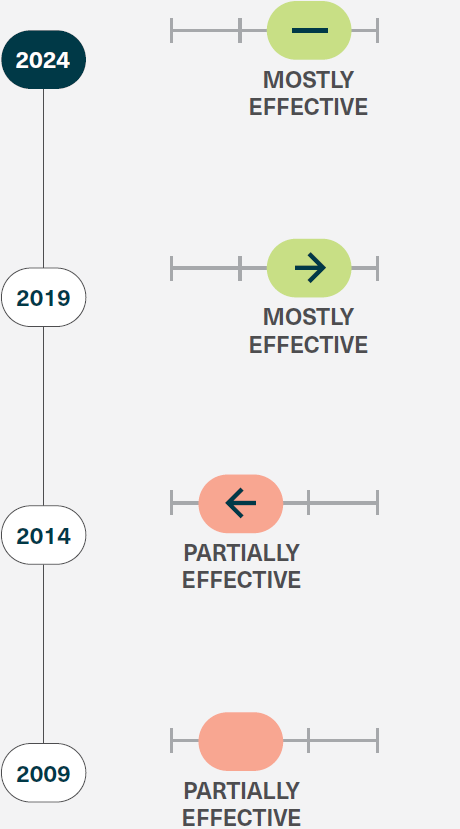
- Fishing management outcomes remain only partially effective in 2024; however, significant reform is being implemented through the Queensland Sustainable Fisheries Strategy.
- Traditional use of marine resources and management of Sea Country have been assisted by Traditional Use of Marine Resources Agreements. The ‘Agreement to Partner’ is a key step in progressing Traditional Owner aspirations for the Reef.
- Research activities and recreational use are generally considered well-managed and low=risk, but knowledge gaps remain regarding both the cumulative impacts of research activities and in the changing nature and scale of recreational use in the Region.
Managing external factors
External factors influencing the Region include:
- climate change
- coastal development
- land-based runoff.
Management is considered the weakest for climate change and coastal development. Nevertheless, climate change has seen the most improvement in management effectiveness since 2019, including enhanced management of climate change risks and advances in climate change policy at national, state and local levels.
Notable policy advances in climate change management include:
- the introduction of the Climate Change Act 2022 (Commonwealth)
- the inclusion of a specific work area under the Reef 2050 Plan that articulates clear goals and strategic actions towards achieving emission reduction targets.
Despite this progress in policy, the management of the Reef regarding climate change remains subject to significant challenges.
Coastal development activities are managed within a multi-level governance system. Planning systems are well-developed, but integration and coordination between land and marine-based planning is a significant challenge. While improvements have occurred in the management of land-based runoff, along with a general reduction in pollutant loads since 2019, the 2025 water quality targets are not expected to be met.
Managing to protect the Region’s values
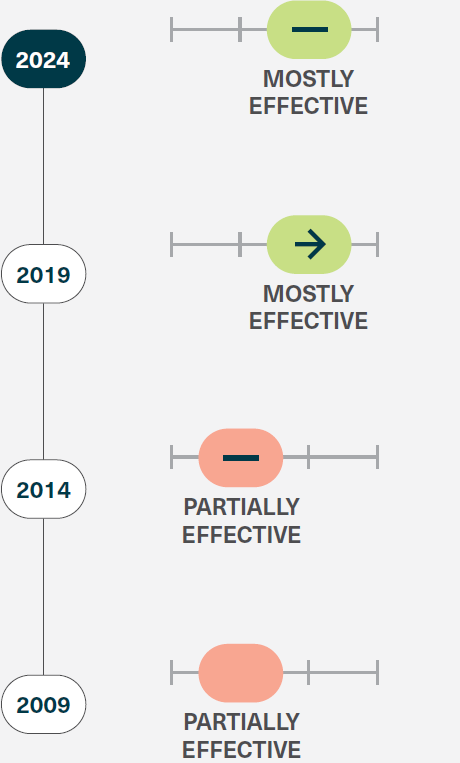
Management that protects the Region’s biodiversity, heritage, and community benefit values is mostly effective. However, inputs to management of heritage and community benefits have not improved from partially effective, and achievement of heritage and biodiversity outcomes has been trending downward since 2019.
Results
| Criteria and component summaries | Grade and trend |
|---|---|
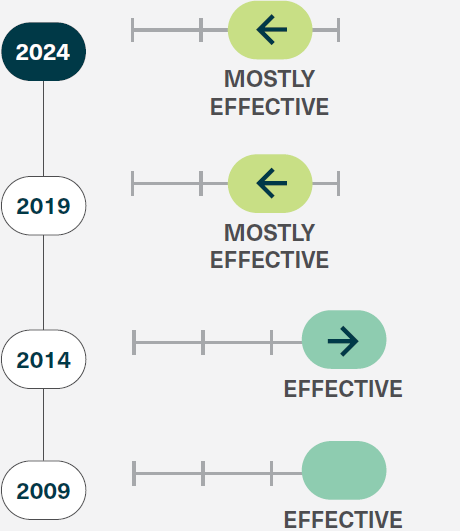
Understanding of context: |
 |
| Criteria and component summaries | Grade and trend |
|---|---|
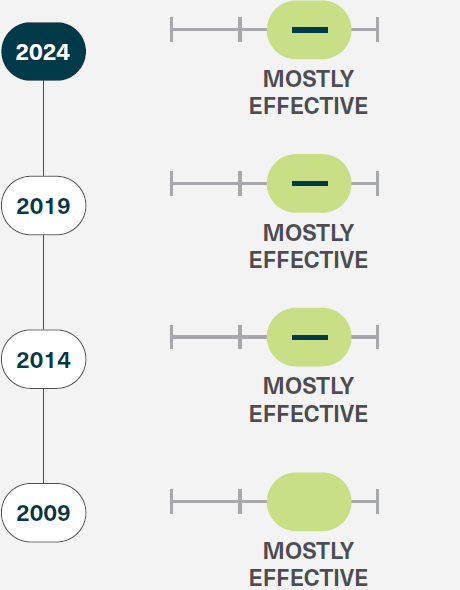
Planning: |
 |
| Criteria and component summaries | Grade and trend |
|---|---|
Financial, staffing and information inputs: |
 |
| Criteria and component summaries | Grade and trend |
|---|---|
Management systems, processes and governance: |
 |
| Criteria and component summaries | Grade and trend |
|---|---|
Delivery of outputs: |
 |
| Criteria and component summaries | Grade and trend |
|---|---|
Achievement of outcomes: |
 |