Overview
The following information is drawn from the Great Barrier Reef Outlook Report 2024 (Outlook Report).
Condition of ecological processes
The condition of the Great Barrier Reef depends on a range of chemical, physical and ecological processes, the health of connected coastal ecosystems, and the impacts of disease and pest outbreaks.
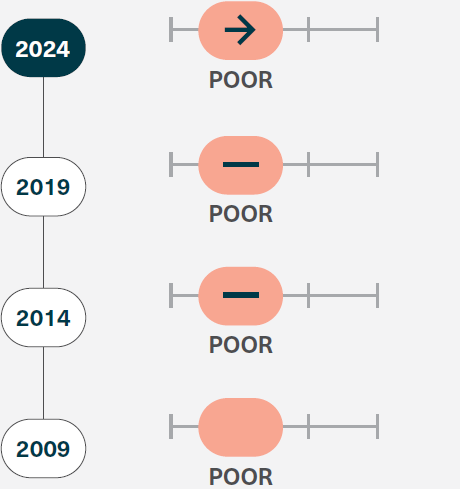
The Outlook Report assesses 31 ecosystem health components across these five areas. It found:
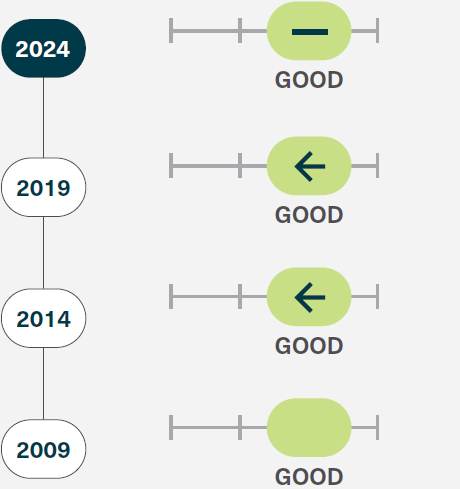
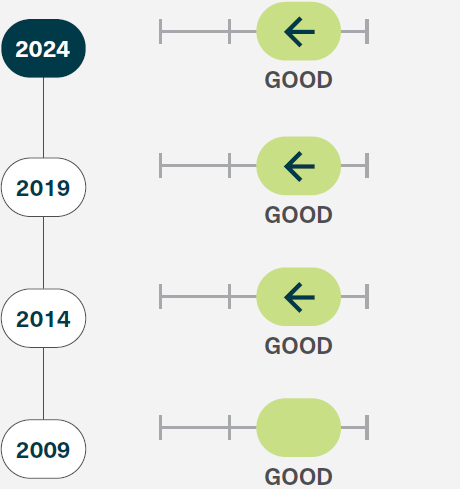
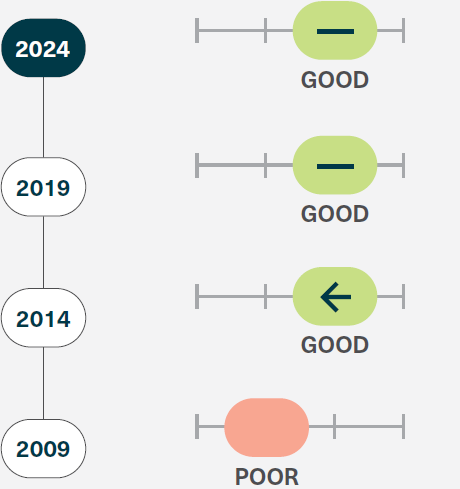
- around 60% remain in good to very good condition
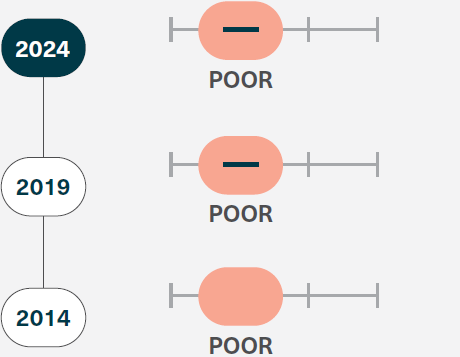
- the rest are in poor to very poor condition.
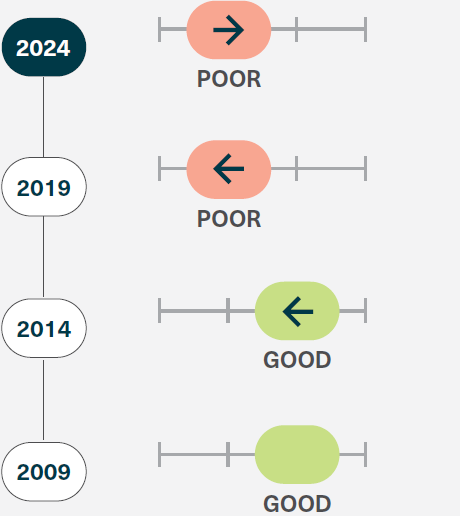
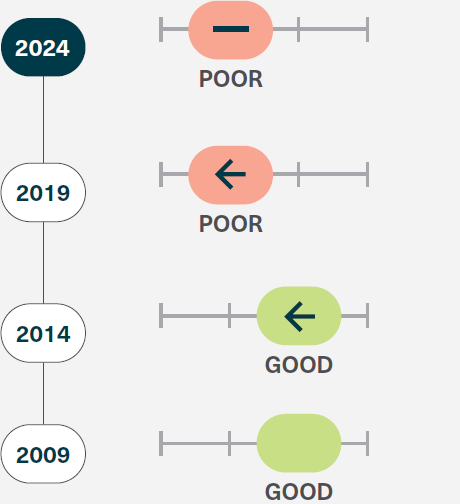
Five of the 31 components have deteriorated (but have not changed grade) since 2019, including four components related to physical processes (sea temperature and sea level), chemical processes (ocean pH), and ecological processes (reef building).
These continued declines in ecosystem condition are largely driven by the ongoing chronic effects of climate change, particularly ocean warming.
Trends
Ecological processes have generally remained stable since 2019, although reef building continues to deteriorate due to ocean acidification. Trends in other processes, including particle feeding, recruitment (the process of adding new individuals to populations) and predation, vary between different taxa.
Declines in recruitment have been reported in some populations of marine turtles and dugongs, for example. The condition (and trend in condition) of some ecological processes, such as microbial processes and competition, remain poorly understood.
Results
See the links below the tables for the Great Barrier Reef Outlook Report 2024 ’s full assessment information (including components within the criteria) and methods.