Wet Tropics protection and management
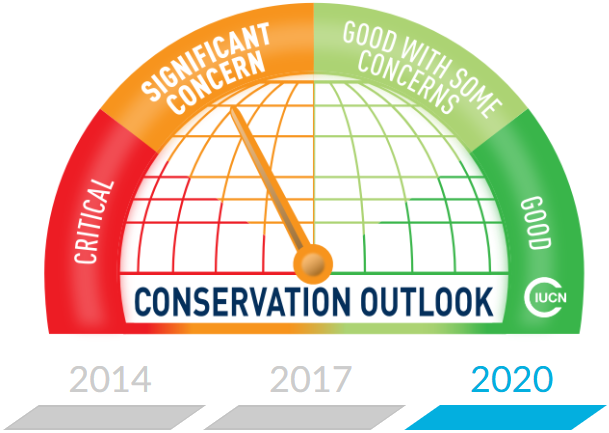
The IUCN World Heritage Outlook Assessment reports from 2014, 2017, and 2020 detail the protection and management of the Wet Tropics of Queensland. These reports were previously published every three years but now come out every five. The next one is scheduled for 2025.
The Wet Tropics Management Authority releases an annual report entitled ‘State of the Wet Tropics’, which outlines management responses to the region’s threats and major issues affecting.
Many stakeholders are involved in the protection and management of the Wet Tropics of Queensland. Multiple layers of stewardship, a range of land tenures (including freehold private property), Natural Resource Management bodies, numerous local governments, tourism and community services, and an engaged community create a complex but effective management landscape.
The IUCN Outlook Assessment 2020 assessed the Authority’s management of the area as mostly effective.
While the resulting work delivers outsized conservation achievements, the risks to the area’s World Heritage values and its long-term integrity are outpacing efforts, mainly due to resourcing not being commensurate with the threat level. Improved resourcing, targeted at effective management, research, and monitoring, is urgently needed to continue fulfilling Australia’s obligations under World Heritage legislation.
Wet Tropics Management Authority
For more than three decades, the Wet Tropics Management Authority (the Authority) has been responsible for delivering the protection, conservation, presentation, rehabilitation and transmission to future generations of the Wet Tropics of Queensland World Heritage Area, fulfilling the Australian Government’s obligations under the World Heritage Convention.
The Authority operates through a partnership approach, working with:
- Rainforest Aboriginal Peoples
- a range of government agencies
- land managers, including NRM groups
- research organisations
- community groups
- the tourism, agriculture and conservation sectors.
Queensland Parks and Wildlife Service and Partnerships
Since the establishment of the Wet Tropics World Heritage Area, new national parks have been declared, bringing more of the area under the day-to-day management of the Queensland Parks and Wildlife Service and Partnerships (QPWS&P).
round 87% of the area is classified as national park, protected area, or other tenure managed by QPWS&P. These offer more than 150 managed walks and 200 managed visitor sites.
First Nations
Rainforest Aboriginal Peoples’ interests in the Wet Tropics area through Native Title, dedicated Indigenous Protected Areas, and Indigenous Land Use Agreements have also expanded. Native Title and other Rainforest Aboriginal land interests cover 87.5% of the area.
Eighteen Registered Native Title Bodies Corporate (RNTBCs) operate in and adjacent to the area, and several other Native Title applicant groups are working through their application processes. As of 30 June 2024, 130 Indigenous Land Use Agreements were in place across the area.
Local government
Eleven local governments manage land within the Wet Tropics area. They are key partners in the landscape. Local government actions in the area include:
- developing and implementing regulations
- implementing biosecurity and invasive species control programs
- supporting sustainability programs directly and through support to other organisations, such as Landcare groups, community groups, schools and landowners
- controlling domestic animals that are also declared undesirable species for the area.
Natural resource management bodies
The Department of Climate Change, Energy, the Environment and Water works with the Department of Agriculture, Fisheries and Forestry to support a network of natural resource management bodies across Australia.
The bodies work with local communities to deliver environmental outcomes and the sustainable use of natural resources. Three bodies work in the Wet Tropics area:
- Terrain NRM
- NQ Dry Tropics
- Cape York NRM.
Conservation and community groups
The Wet Tropics has a large and strongly engaged network of non-government organisations and community groups involved in conservation. These conservation programs deliver a broad range of actions, including:
- on-ground conservation work
- mobilising the community
- raising awareness
- successfully advocating to the government for the policy changes and resourcing required to protect the area’s values.
The Cairns and Far North Environment Centre (CAFNEC) and the North Queensland Conservation Council are the peak regional non-government environmental organisations covering the area. For over 40 years, they have supported the community and local groups in making their voices heard and taking action.
Selected outcomes 2020-2024
First Nations
- Six Traditional Owner groups in the Wet Tropics region are developing plans for biodiversity and threatened species management.
- Sixteen community-based Indigenous ranger groups are active in the Wet Tropics region.
Conservation and community groups
- Several private (not-for-profit) land conservation trusts, including the South Endeavour Trust, Bush Heritage, Australian Wildlife Conservancy, Rainforest 4, Rainforest Rescue and the Queensland Trust for Nature, partner with us to protect threatened ecosystems and wildlife through Nature Refuges (private protected areas).
- The Wet Tropics Restoration Alliance was established in September 2022. It comprises 28 organisations and independents, including Traditional Custodians, landscape restoration practitioners, research organisations, conservation entities and investors. The Alliance aims to ensure the survival of Wet Tropics forests and enhance the region’s resilience through nature-based and traditional ecological solutions, including revegetation and conservation outside reserves.
Wet Tropics Management Authority
- The Wet Tropics Management Authority (the Authority) manages the Yellow Crazy Ant Eradication Program (YCAEP). Jointly funded by the Australian and Queensland Governments and working with a wide range of partners, the program aims to eradicate yellow crazy ant infestations within the Wet Tropics World Heritage Area. Until June 2024, the program had successfully eradicated ants in 480.1ha, with 2,288ha currently under management and surveillance.
- The Authority implements the Wet Tropics Management Plan requirements, including permits and compliance for infrastructure and roads, with a recent focus on recovery from Cyclone Jasper’s impacts.
Mining ban
- In October 2023, the Wet Tropics World Heritage Protection and Management Act 1993 was amended to effectively ban mining within the World Heritage Area.
Threatened species recovery
- Donaghy’s Corridor—a revegetated rainforest corridor—is now used by the bare-rump sheathtail bat (Saccolaimus saccolaimus nudicluniatus) and the diadem leaf-nosed bat (Hipposideros diadema). Donaghy’s Corridor, along with the Lakes Corridor and Peterson Creek Corridor, also supports most of the Wet Tropics’ IUCN-listed bird species in sites that are now in their third decade of growth. Peterson Creek Corridor also supports green ringtail possums and Lumholtz’s tree-kangaroo.
- The Tropical Mountain Plant Science collaboration aims to secure the future of Australia’s climate-threatened tropical montane cloud forest plants. The project has:
- established more than 35 species offsite in partner gardens
- banked seed of 14 species
- assessed germination, dormancy and storage potential of many more
- discovered species new to science in the wild
- rediscovered some species thought extinct
- investigated how plants may respond to warming and changed moisture availability.
- Terrain NRM, Western Yalanji Traditional Owners, JCU researchers, Gulf Savannah NRM and QPWS&P partnered on a project to protect the critically endangered mountain-top nursery frog (Cophixalus monticola). The mountain-top nursery frog has been monitored throughout different altitudes in the Wet Tropics for three years. Feral pigs were identified as one of the significant threats to their survival (along with climate change and other invasive species). An Australian Government Saving Native Species Grant will support fencing sections of habitat to keep pigs out. Teams will survey the pig population and set up satellite-monitored traps.
- In May 2023, following intensive vegetation management to restore habitat quality and a study of source population genetics to select genetically diverse individuals for reintroduction, 49 northern bettongs (Bettongia tropica) were translocated to a 950ha predator-proof fenced area at the Australian Wildlife Conservancy Mount Zero-Taravale Nature Refuge (private protected area). Establishing a secure population of northern bettongs at this sanctuary will help safeguard the species and potentially provide a source of individuals for further reintroductions across the species’ former range.
- There are dedicated threatened species recovery teams working on protecting and recovering threatened species of high significance in the Wet Tropics. These collaborative teams include subject matter experts, government representatives, researchers, landholders, Traditional Owner groups, and conservation and wildlife organisations. The Authority participates in and supports several threatened species recovery teams, including the:
- Cassowary Recovery Team
- Spectacled Flying-fox Recovery Team
- Mahogany Glider Recovery Team
- Northern Bettong Recovery Team.
IUCN World Heritage Outlook Assessment
2020 Conservation outlook: significant concern
The Wet Tropics of Queensland World Heritage site is protected by:
- a strong and updated legislative framework
- a dedicated independent Management Authority that enjoys broad community support
- a comprehensive suite of management strategies.
However, the insidious and damaging threat posed by invasive plants, animals, and diseases, and the impacts of climate change presents a real danger to the continuing integrity of the site’s biodiversity and associated endemic species. While significant efforts have been made to address these threats on the ground, the level of investment does not appear to be commensurate with the urgent need for significant preventative and remedial action.
2020 Overall assessment of protection and management: mostly effective
The statutory Wet Tropics Management Plan 1998 was reviewed and released in September 2020. The Wet Tropics Management Authority (the Authority) has a range of policies and strategies that provide a sound management framework for managing tourism, community services infrastructure, and conservation activities.
The Authority has developed a comprehensive range of regional partnerships to implement these strategies. It has constructive relationships with the 11 local governments and utility infrastructure service providers operating in the region. Codes of practice guide maintenance work in and around the area to minimise adverse impacts.
However, a range of threats, including invasive weeds, pests, and pathogens, and predicted climate change, present increasing challenges to land managers, including the Authority. While a comprehensive range of plans are in place, the resources available to implement them effectively are limited, particularly regarding managing all invasive pests, weeds and pathogens.
A multifaceted program to eradicate yellow crazy ants from areas within and adjacent to the World Heritage site has significantly reduced the number of this invasive pest. The eradication program, jointly funded by the Australian and Queensland Governments, has secured funding to 2026. While some success against the yellow crazy ant infestation is good news, much more work.
2020 assessment of the effectiveness of protection and management in addressing threats outside the site: mostly effective
The Authority has built constructive relationships with 11 local governments that include parts of the World Heritage site. It also works in partnership with the regional community to build a sense of ownership and share the benefits and burdens of sound management.
There is a close collaboration with Terrain NRM. This regional natural resources management body promotes and funds good land management practices in the region, often on land close to the World Heritage site. A broad range of habitat corridor priorities identified in the Wet Tropics Conservation Strategy are incorporated into the Terrain Regional NRM Plan.
The Authority is engaged with several local conservation and NRM groups, and through the Wet Tropics Restoration Alliance, to improve connectivity in the Southern Atherton Tablelands and build resilience to climate change. Given the recent discovery of species that contribute to the Outstanding Universal Value of the site (e.g. the armoured mistfrog) in boundary areas, it will be critical to ensure that threats to these newly discovered populations are also addressed and access to lands that hold potential for further rediscovery targeted. The most significant external threat to the Outstanding Universal Value of the site from climate change is beyond the capacity of the Authority to manage by itself.
Results
Wet Tropics Assessment of Protection and Management & Trends
Highly effective
Highly effective
Assessment Criteria | 2014 | 2017 | 2020 |
|---|---|---|---|
Overall assessment | Mostly effective | Mostly effective | Mostly effective |
Overall assessment outside the site | Mostly effective | Mostly effective | Mostly effective |
Management system | Mostly effective | Mostly effective | Some concern |
Effectiveness of management system | Mostly effective | Mostly effective | Mostly effective |
Boundaries | Mostly effective | Mostly effective | Mostly effective |
Integration into regional and national planning systems | Some concern | Some concern | Mostly effective |
Relationships with local people | Highly effective | Highly effective | Mostly effective |
Legal framework | Highly effective | Highly effective | Highly effective |
Law enforcement | Highly effective | Highly effective | Mostly effective |
Implementation of committee decisions and recommendations | Highly effective | Highly effective | Highly effective |
Sustainable use | Highly effective | Highly effective | Mostly effective |
Sustainable finance | Some concern | Some concern | Some concern |
Staff capacity, training, and development | Highly effective | Highly effective | Mostly effective |
Education and interpretation programs | Highly effective | Highly effective | Mostly effective |
Tourism and visitation management | Highly effective | Highly effective | |
Monitoring | Highly effective | Some concern | |
Research | Mostly effective | Mostly effective | Some concern |