Overview
The following information is drawn from the Great Barrier Reef Outlook Report 2024 (Outlook Report).
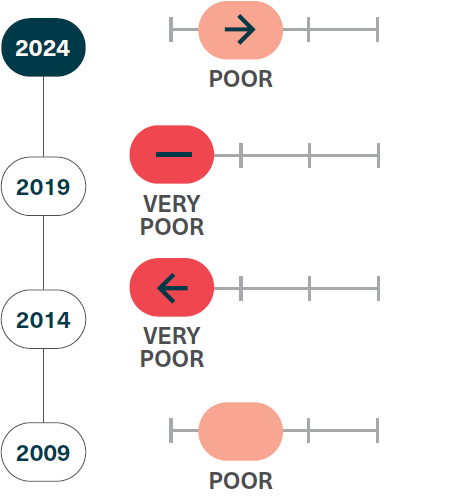
Crown-of-thorns starfish outbreaks continue to affect the Great Barrier Reef. Persistent outbreaks at some southern reefs and a new outbreak in the northern region continue to alter ecosystem function on affected reefs. However, increased efforts in starfish control have led to both reef and regional-scale improvements.
Crown-of-thorns starfish are a native coral predator on the Great Barrier Reef. The species’ life history characteristics, such as its exceptional fecundity (ability to produce offspring), naturally encourage population fluctuations and enable the starfish to quickly reach outbreak proportions when conditions are favourable. The causes of crown-of-thorns starfish outbreaks are complex and remain a subject of ongoing research.
Since the 1960s, the Great Barrier Reef has experienced four destructive outbreaks of crown-of-thorns starfish. Once established, an outbreak spreads when adult starfish spawn and currents carry their larvae to other reefs.
Recent evidence indicates that manual removal of starfish from reefs is the most effective way to mitigate outbreaks and can achieve individual reef and regional‑scale coral benefits with timely detection and response. Culling efforts have become much more effective over the past decade (to 2024) due to several improvements, including:
- adopting an integrated pest management approach
- developing a single-shot injection technique
- making advances in computer-aided modelling and prediction
- increasing vessel capacity.
Results
See the links below the table for the Great Barrier Reef Outlook Report 2024’s full assessment information and methods.