Overview
The following information is drawn from the Great Barrier Reef Outlook Report 2024 (Outlook Report).
The Great Barrier Reef Region’s catchments, coastline and islands are human landscapes that accommodate approximately 1.2 million people and various activities and land use practices.
Coastal development includes all development activities, construction and land uses in the Catchment, coastlines and islands. Since the arrival of Europeans in the Region in the mid-1800s, broadscale changes have occurred in land use, resulting in widespread changes in landscapes. These historical changes, along with current activities, affect Reef ecosystems.
Factors driving coastal development
Coastal development in the Region is driven by a range of factors, with major land use changes in the Catchment over the past 150 years linked to national and state development schemes and global market forces, as well as the needs of the local population. Population growth drives coastal development, particularly in urban areas, intensifying infrastructure demands; for example:
- more roads and more extensive stormwater networks
- more sewage treatment
- increased food production
- expansion into previously remote areas of the Catchment.
Proposed infrastructure plans for Queensland now include renewable energy zones within the Catchment and upgrading infrastructure to encourage major energy projects, such as large-scale wind, solar and hydrogen power stations. They also include the world’s largest pumped storage hydropower scheme proposed in the Pioneer Valley and Burdekin Basin catchments.
Overall, a range of land uses that can significantly impact the Great Barrier Reef's condition are at or close to historical highs of land cover and production, including cattle, cropping and aquaculture.
The Outlook Report’s analysis of coastal development considers aspects including:
- agriculture
- mining and resources
- urban and industrial development
- light pollution
- sewerage treatment plants
- barriers to flow
- tidal works
- linear infrastructure
- aquaculture port development
- marine access infrastructure
- island development.

Effects of coastal development
The Great Barrier Reef’s ecosystems remain vulnerable to legacy effects and current and future coastal development, compounded by interactions with other factors like climate change. The effects of different land uses and activities combine to:
- modify coastal ecosystems
- alter connectivity across landscapes
- directly remove and replace intertidal and subtidal marine ecosystems
- create chronic changes in the marine environment.
The primary pressure from coastal development is poor water quality from agricultural land use. Barriers to flow across the landscape and wetland modifications increase the risks posed by poor water quality. By comparison, direct pressures from urban, industrial and mining development are currently relatively minor.
Coastal development and regional communities
Coastal development occurs in areas of the Catchment where most of the population resides. The perception of coastal development as a threat to the Great Barrier Reef by regional communities has decreased over time.
For urban and rural communities, coastal development provides broad economic and social benefits through employment, economic activity and housing. More specifically, people derive benefits from the Great Barrier Reef. Coastal development increases access to the Reef’s ecosystems, which can be enjoyed by more people, more frequently or easily. For example, roads reduce travel time, and boating facilities increase access points.
However, poorly managed coastal development that threatens the ecosystem’s health can reduce the ecosystem services that regional communities can benefit from. Reduced water quality can affect activities such as recreation and tourism. Along with land clearing, reduced water quality can negatively affect critical habitats, such as mangroves, which provide coastal protection to the Region’s residents.
The effects of climate change are likely to amplify the effects of coastal development (urban, industrial and rural) on the Great Barrier Reef. Therefore, the implications of coastal development cannot be considered in isolation.
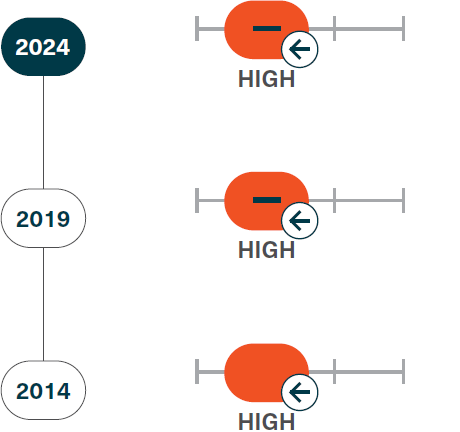
Results
See the links below the tables for Great Barrier Reef Outlook Report 2024’s full assessment information and methods.