Overview
The following information is drawn from the Great Barrier Reef Outlook Report 2024 (Outlook Report).
Land-based runoff refers to freshwater flow from the terrestrial environment and what is carried with it into receiving waterbodies, such as rivers, creeks, wetlands, and nearshore marine waters. Land-based runoff is often associated with an increased supply of pollutants into the Reef lagoon, such as suspended sediments, particulate and dissolved forms of nitrogen and phosphorus, and pesticides.
The following activities can influence land-based runoff and negatively affect downstream water quality:
- fertiliser application
- deforestation
- coastal development
- livestock management
- pest control
- stormwater and sewage management
- aquaculture
- mining and fracking
- earthworks.
Marine debris and other pollutants are also a concern.
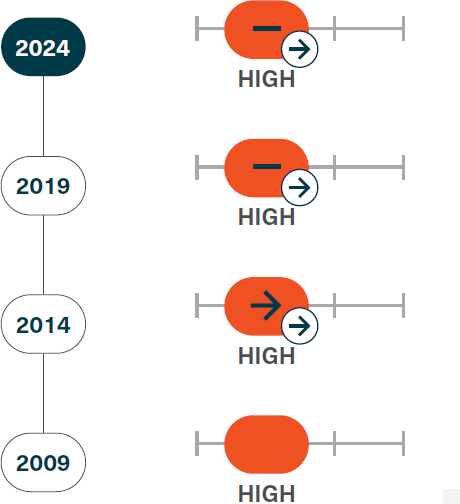
Land-based runoff remains the most significant contributor to reduced water quality, resulting in the declining state of many inshore marine ecosystems in some areas of the Reef. The main contemporary source of the primary pollutants (nutrients, sediments, and pesticides, including herbicides, insecticides and fungicides) from the Catchment is diffuse source pollution from agriculture. Groundwater also has a potential role in nutrient and pesticide transport into the marine environment. The impact of pollutants found in riverine plumes is evident up to 20 to 30 kilometres offshore during large floods depending on the event’s size and duration.
Pollutants in land-based runoff can affect ecosystem resilience by reducing biodiversity and destabilising ecosystem functions and services. The Reef 2050 Water Quality Improvement Plan 2017–2022 (Reef 2050 WQIP) seeks to:
- improve the quality of water flowing from the catchments adjacent to the Reef
- support the resilience of the Reef’s ecosystems.
Land-based runoff of pollutants has sharply increased since European settlement along the Queensland coast. The development of adjacent catchments is the major contributor to the decline of water quality entering the Reef. However, land use changes vary between catchment areas. For example, almost 80% of the grazing land area is contained within the Burdekin and Fitzroy natural resource management (NRM) regions, while much of the area of sugarcane and horticulture crops is in the Wet Tropics, Mackay Whitsunday, and Burnett Mary regions.
The Reef 2050 WQIP targets consider regional differences in land use type and pollutants likely associated with each of the Reef’s 35 coastal catchments. This crucial information guides collective efforts to improve the water quality flowing to the Reef from land-based sources. The catchment profiles provide information about each area, including size and rainfall, land use, targets, the priorities for water quality improvement and the sources of pollutants management. The highest priority areas for reducing fine sediment, dissolved inorganic nitrogen and pesticide loads are:
- fine sediment and particulate nutrients: Burdekin, Herbert, Fitzroy and Mary catchments
- dissolved inorganic nitrogen: Herbert, Haughton, Mulgrave–Russell, Johnstone, Tully and Plane catchments
- pesticides: Mulgrave–Russell, Johnstone, Herbert, Haughton, Proserpine, O’Connell, Pioneer, Plane and Fitzroy catchments.
Regional communities along the Reef consider improved land management to improve water quality as one of the main interventions for managing the Reef. Government and community members, particularly farmers, continue to invest in and implement programs that improve water quality by reducing nutrients, sediments and pesticides entering the Reef lagoon.
Recent improvements in water quality across most inshore marine areas of the Reef are encouraging, despite slow progress towards reducing pollutant loads in adjacent catchments.
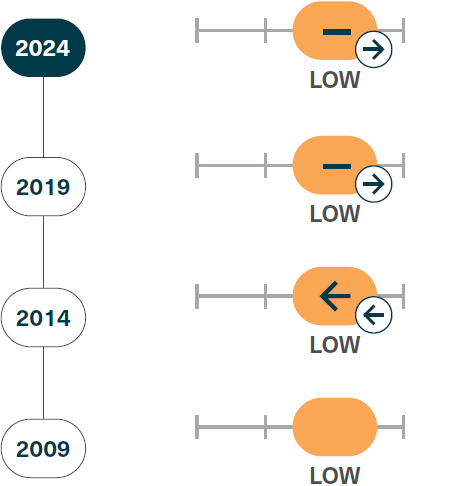
Wind-driven resuspension of sediments will continue to affect water quality in nearshore areas.
Despite lag times with catchment improvements, and considerable natural variability, the recovery of nearshore ecosystems is closely linked to improved water quality, as seen by the improving condition of seagrass meadows. Sustained water quality improvement remains critical for alleviating the compounding effects of climate change.
Results
See the links below the tables for the Great Barrier Reef Outlook Report 2024’s full assessment information and methods.