


Land Restoration Fund Implementation
 © Queensland Government
Growing carbon farming in Queensland
The Queensland Government has committed to reducing carbon emissions by at least 30% on 2005 levels by 2030 and reaching zero net emissions by 2050.
To achieve this, Queensland must reimagine its landscape and economic sectors in a zero-carbon world. Carbon farming is an integral part of our response to climate change.
Carbon farming includes land management activities aimed at storing carbon in trees and soils or avoiding the release of carbon through better management of fire, livestock, and fertiliser use.
In Australia, carbon farming activities that comply with specific formulas or methods can generate carbon offsets. Carbon offsets that meet the requirements of a method are tradable commodities.
Carbon farming methods
For the agriculture and land sector, carbon farming methods include:
- Agricultural methods – which avoid the release of greenhouse gases like methane from activities involving cattle, dairy and irrigated cotton and locking up greenhouse gases in the ground by increasing soil carbon.
- Vegetation methods – which remove carbon dioxide from the air by re-growing forests (reforestation, revegetation, and encouraging native regrowth) and avoiding the clearing of existing forests.
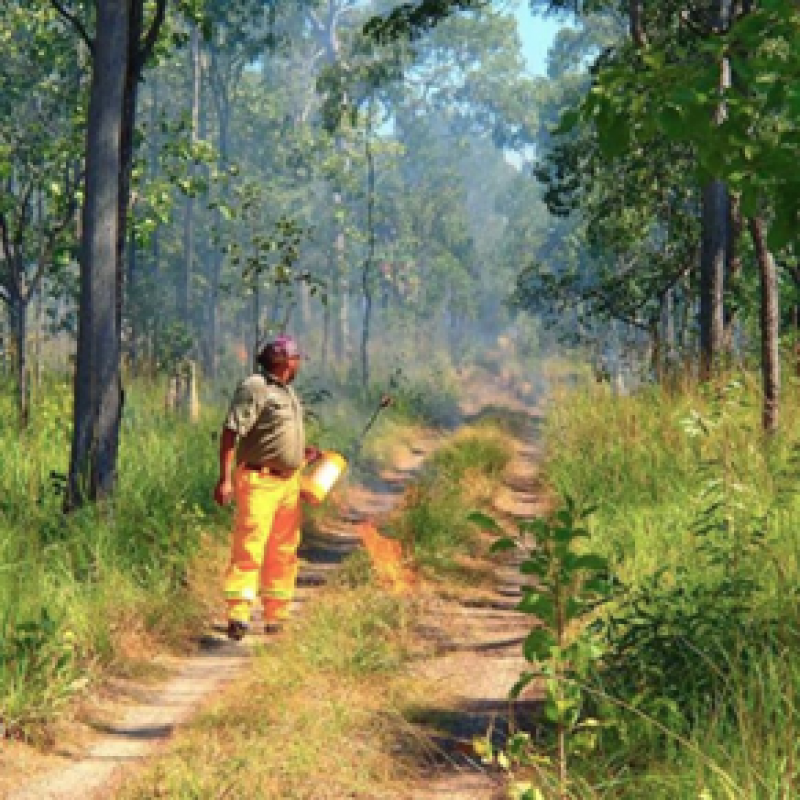
- Savanna burning methods – which use fire management practices in northern Australia to avoid highly-potent greenhouse gases being released by wildfires and protect the carbon stored in logs and other dead vegetation.
Queensland has natural advantages for carbon farming, including long coastlines, extensive wetlands and vast savannas. As of 25 September 2024, the state had 426 carbon farming projects using agricultural, savanna burning and vegetation methods, making it one of Australia’s leading jurisdictions for carbon projects.
The Land Restoration Fund
The Queensland Government’s Land Restoration Fund is growing the carbon farming industry in Queensland and supporting farmers, First Nations peoples and other landholders in participating in carbon markets.
The Land Restoration Fund is investing in carbon farming projects that will deliver on the three objectives outlined in its Priority Investment Plan:
- Land restoration to improve the health of wetlands and coastal ecosystems, including the Great Barrier Reef
- Land restoration for threatened species and ecosystems
- Land restoration for social and economic sustainability.
The Land Restoration Fund is unique in Australia because it recognises and pays for the valuable co-benefits generated by carbon farming projects in addition to carbon abatement.
Co-benefits are the direct positive environmental, social or economic outcomes associated with carbon farming projects.
The Land Restoration Fund recognises the value of co-benefits across three main categories:
- Environmental – improving biodiversity, habitat for threatened species, soils, wetlands, and water systems.
- Socio-economic – improving the resilience and strength of regional communities by providing direct and indirect jobs and more investment into Queensland regions.
- First Nations – providing on-Country business and training opportunities, as well as new service delivery businesses and supporting cultural connections.
Investment rounds
Since 2020, the Land Restoration Fund has run three investment rounds, resulting in contracts with carbon farming projects across the state that will benefit the Great Barrier Reef, regional communities, threatened species and the environment. The LRF’s Investment Rounds Report summarises all the projects the Land Restoration Fund has contracted.
Research, innovation and market support
The Land Restoration Fund invests in research, innovation and market support to make carbon farming accessible to more Queenslanders.
One way the Land Restoration Fund is broadening eligibility and removing barriers to carbon farming is by working with the Clean Energy Regulator to develop and revise carbon methods that suit Queensland’s landscapes. This work has included:
- the successful submission of an Improved Avoided Clearing of Native Regrowth method for progression through the Federal Government’s method development process.
- participation in the co-design of the first blue carbon method for Australia
The Land Restoration Fund also supports Queensland landholders in participating in carbon farming, including through its Carbon Farming Advice Scheme. Since 2020, the Land Restoration Fund has delivered three rounds of the scheme, supporting more than 260 landholders to access up to $10,000 to pay for expert carbon farming advice on their properties.