


A new Blue Heart for the Sunshine Coast
Showcasing wetland rehabilitation and Australia's first blue carbon project
 © Gary Cranitch @Queensland Museum
 © Gary Cranitch @Queensland Museum
Background
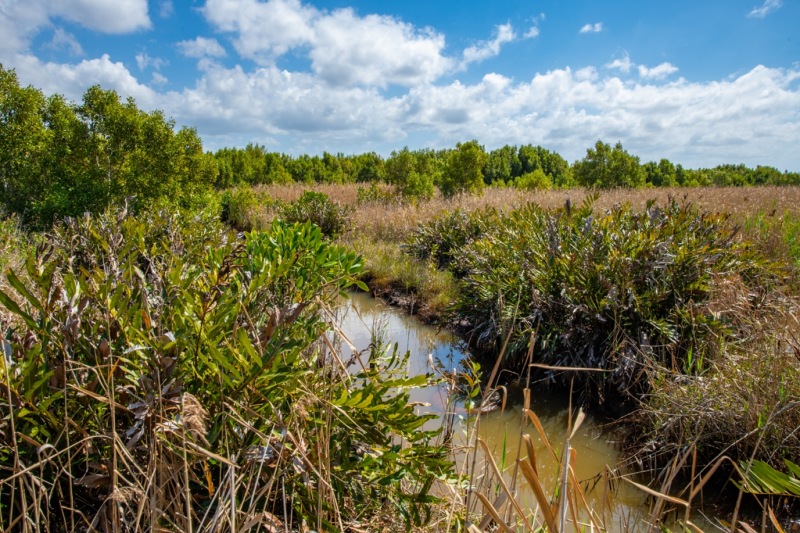
Wetlands comprise just over four per cent of the Queensland landscape, making them some of the most important ecosystems. Wetlands brim with wildlife and provide many services and benefits, including:
- sequestering carbon
- processing pollutants
- providing wonderful recreational opportunities
- giving flood and tidal surge protection
- delivering food and water.
The extent and condition of Queensland’s wetlands have declined significantly. Despite a level of protection, we continue to lose wetlands as development expands and land and infrastructure needs increase.
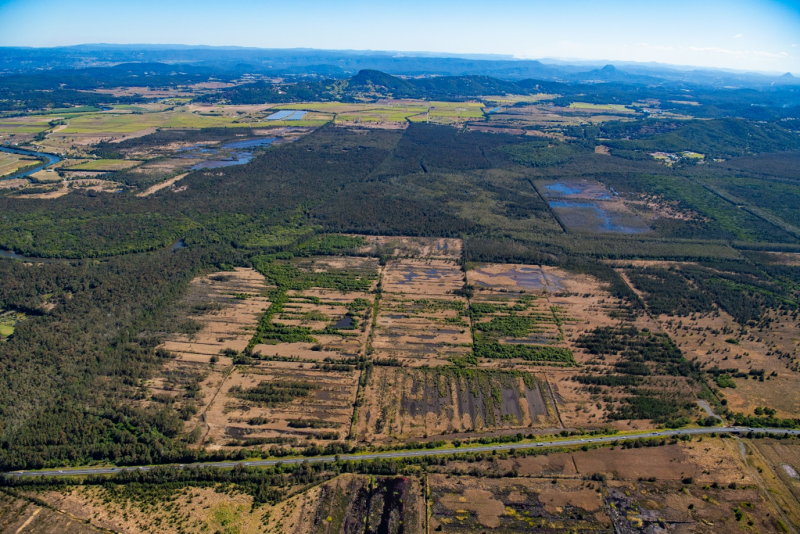
The Blue Heart project in the Sunshine Coast will increase the extent and quality of connected wetlands close to major urban centres in South East Queensland by converting low-lying former cane-growing land back to wetlands. Wise management of this area as it transitions under climate change will provide significant opportunities to adjacent landholders, Traditional Owners, Sunshine Coast residents, Queensland, and beyond.
Initiative overview
The Blue Heart project covers over 5,000 hectares of the Maroochy River floodplain in Queensland. It is a critical flood storage area that also experiences impacts from tidal inundation, a trend expected to continue under projected sea level rise. The area includes over 2,000 hectares of public land, including:
- council reserves
- state conservation park
- Unitywater's Yandina Creek Wetland.
The Blue Heart project is an innovative partnership between the Sunshine Coast Council, Unitywater and the Department of the Environment, Tourism, Science and Innovation, operating under a Memorandum of Understanding.
The project aims to manage the tidal transition as sea levels rise and provide positive environmental, economic and community outcomes, including:
- exploring new land use and economic opportunities for landowners
- retaining flood hazard management
- enhancing biodiversity
- increasing community and recreational opportunities
- improving the Maroochy River water quality.
Outcomes
A flagship initiative of the Blue Heart is an innovative and large-scale blue carbon project to restore and manage blue carbon ecosystems on approximately 680 hectares of public land in the Blue Heart and to demonstrate an alternative source of income for landholders through the generation of blue carbon credits. This project is Australia’s first and largest blue carbon project registered under the Australian Government’s Australian Carbon Credit Unit Scheme.
Since European settlement, approximately 120 hectares of intertidal wetlands and 3,100 hectares of vegetated freshwater swamps in the Blue Heart area have been lost. Encouragingly, all intertidal wetlands and 650 hectares of freshwater wetland types had been reestablished by 2019.
As land in the Blue Heart continues to transition to wetland, updates to the Queensland Wetlands Mapping will capture these changes in wetland extent.
The Blue Heart also provides a valuable opportunity to undertake critical scientific research about wetland rehabilitation, which can be used for other wetland rehabilitation activities throughout Queensland.
“The Blue Heart demonstrates how wetland rehabilitation projects are delivered and the benefits they achieve. The project’s benefits include carbon sequestration, flood mitigation, sediment trapping, nutrient cycling, extended habitat, recreation and opportunities for Traditional Owners.” - Dr Sonia Marshall, Sunshine Coast Council