


Grazing Resilience and Sustainable Solutions Program
 © Queensland Government
Sediment run-off can have a significant impact on the health of the Great Barrier Reef. Fine sediment washed into waterways flowing to the Reef can carry harmful nutrients and block the light needed for seagrasses and corals to grow.
The $15.48 million Grazing Resilience and Sustainable Solutions (GRASS) program works with graziers in the Burdekin, Fitzroy and Burnett Mary regions to reduce sediment run-off to the Great Barrier Reef while building more resilient grazing businesses.
The GRASS program commenced in 2019. It focuses on improving ground cover on poor or degraded land and supports graziers to develop tailored action plans for their properties.
The action plans are based on best management grazing methods and designed to increase productivity and business resilience while minimising soil loss.
Graziers work closely with agricultural extension officers and staff from the following organisations:
- Department of Primary Industries
- NQ Dry Tropics
- Fitzroy Basin Association
- Burnett Mary Regional Group
On-ground action and activities include:
- erecting fences to manage grazing pressure
- installing new infrastructure, such as watering points
- managing small gullies
- controlling stock access
- earthworks to reduce erosion.
Results
Phase 1 of the GRASS program finished in June 2023 and developed 449 action plans covering 2.92 million hectares, guiding the improved management of 720,890 hectares of poor or degraded land.
By changing their grazing practices, it is estimated graziers are estimated to prevent around 20,700 tonnes of sediment from entering the Great Barrier Reef annually.
Phase 2 is due to be completed in 2026. It has delivered 214 new action plans covering 1,478,005 hectares, guiding improvement across 152,617 hectares of poor and degraded land (30 June 2024).
As of 30 June 2024, 92 incentive projects are underway, with grazier co-contribution reported to be $2.95 million. This leverages the Queensland Government’s incentive funding of $1.25 million, making the total on-ground investment $4.2 million.
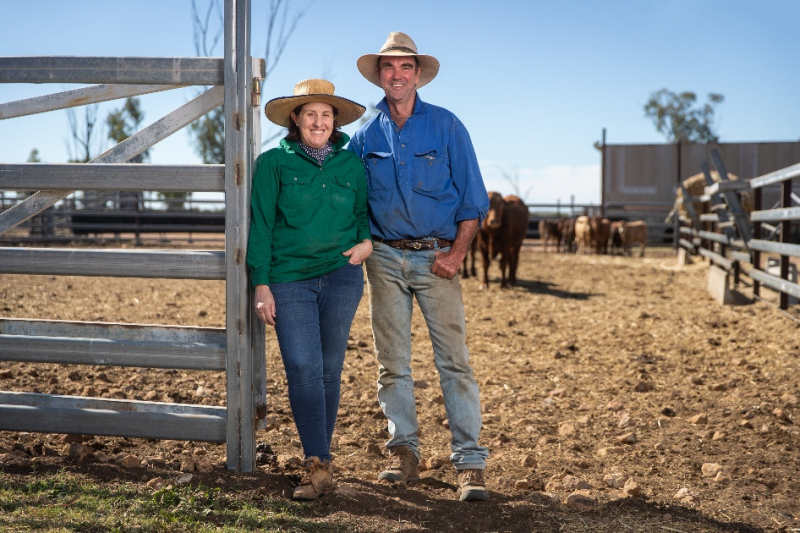
Grazier and Phase 1 participant Emma Robinson said:
“Maximising our ground cover for the cattle has an incredible flow-on effect. More grass means better productivity and better nutrition for the animals which improves animal fertility and weight gain. When it rains, the soil captures more of the rainfall, meaning less water runs into the river system and then onto the Great Barrier Reef. Essentially, the more grass, the better.”
The GRASS program is funded through the Queensland Government’s Queensland Reef Water Quality Program and delivered by the Department of Primary Industries, Burnett Mary Regional Group, Fitzroy Basin Association and NQ Dry Tropics.