


Nangur Spiny Skink
 © Queensland Government
Reducing the extinction risk for the Nangur spiny skink
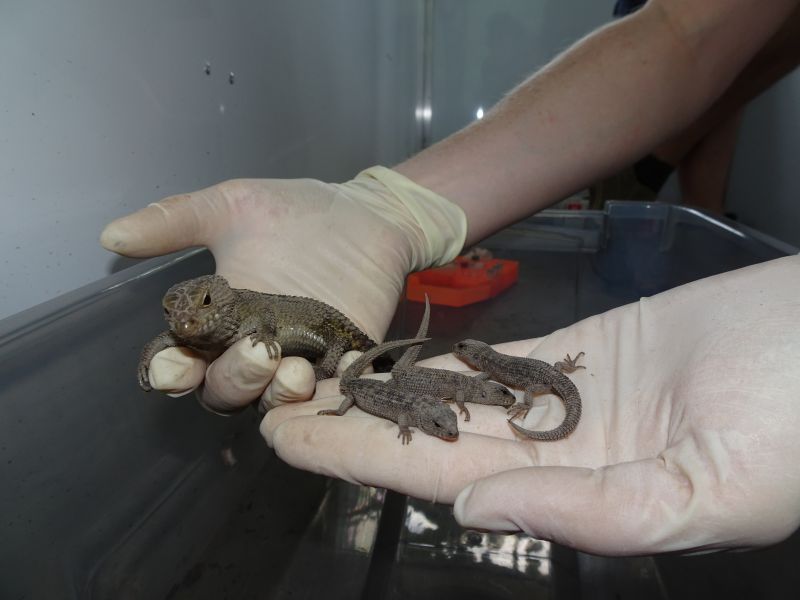
The Queensland Government is making positive steps to recover the critically endangered Nangur spiny skink. The Queensland Government, supported by The Foundation for Australia’s Most Endangered Species (FAME), has successfully established a captive breeding program and a new Nangur spiny skink population.
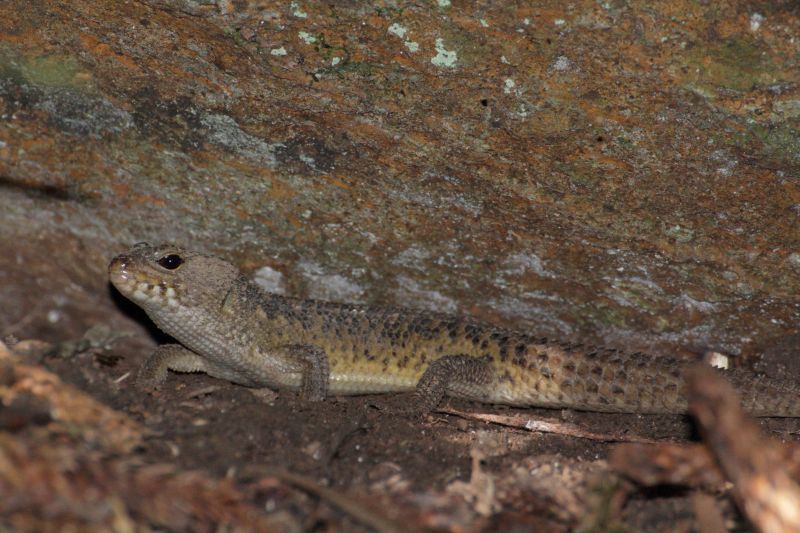
The Nangur spiny skink is found only in South East Queensland, just outside Gympie, on the Country of the Kabi Kabi People and Wakka Wakka People.
Up to 1,000 adult skinks are currently estimated to be restricted to two populations in the species range. Extensive surveys in over 30 locations have failed to find populations other than the two in Nangur National Park and Oakview National Park. Genetic analysis shows these two populations became isolated several hundred thousand years ago.
Captive breeding program success
A captive breeding program was established in 2020. The aim is to prevent the loss of genetic diversity and establish new wild populations. This program has successfully kept and bred Nangur spiny skinks in captivity.
In 2022-23, 20 captive-bred skinks were released at a new site near the existing wild populations. Eighteen months later, the population had more than 50 skinks due to the high survival rates for the released individuals and natural breeding that produced offspring.
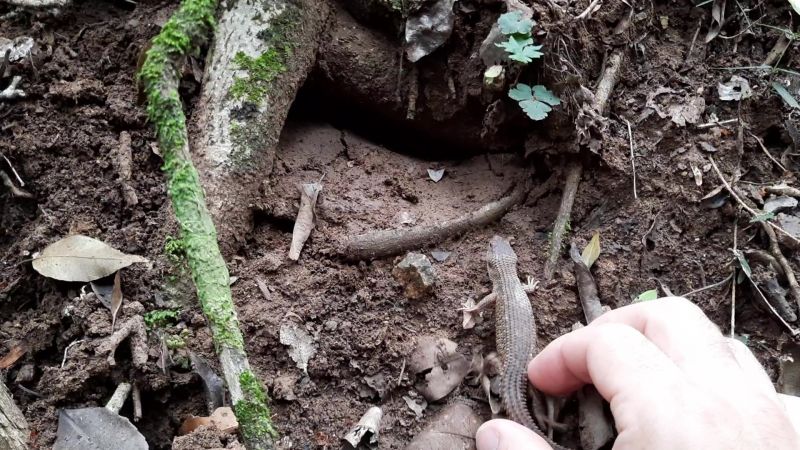
To increase their chances of survival following the release, the Queensland Government team prepared artificial burrows to provide immediate shelter. They also set up barriers around the individual burrows to protect the skinks from predators, such as feral cats, foxes, pigs, and other animals that can trample their habitat. The newly translocated population is being monitored using remote cameras to determine their survival and breeding success in the wild.
The captive breeding program has also improved our knowledge of the skink’s ecology and behaviour, such as its longevity, age to maturity, and possible ability to transfer water through capillary action to its mouth.
Ongoing recovery efforts
The Department of Environment, Science, Tourism, and Innovation (DETSI) is leading other priority recovery actions critical to the long-term recovery of the Nangur spiny skink. This activity includes:
- performing ongoing threat abatement at the sites, including predator management
- implementing suitable fire regimes
- undertaking extensive weed management and monitoring the success of these programs
- conducting surveys to monitor the skink’s population size, trajectory and threatening processes
- undertaking genetics research to inform the management of the populations.
The success of this recovery program is possible through the support and collaboration with key partners, including:
- FAME
- James Cook University
- Zoos and Aquarium Association
- Kabi Kabi People’s Aboriginal Corporation
- Wakka Wakka Native Title Aboriginal Corporation
- Gympie Regional Council
- Gympie & District Landcare Group.
Senior ecologist Daniel Ferguson (DETSI) said:
“We knew that five female skinks were pregnant when we released them, and all gave birth to up to four juveniles, increasing the number of skinks at the release site by approximately twenty.
Even more exciting is that three of the young female skinks released in January 2023 gave birth to at least six juveniles (at least two each) in February 2024.
This is a significant milestone for the program as these juveniles were conceived at the release site by previously immature skinks bred in captivity, confirming that females mature at three to four years of age.”
 © Queensland Government
 © Queensland Government