


Northern Hairy-Nosed Wombat
 © Queensland Government
Brought back from the brink of extinction
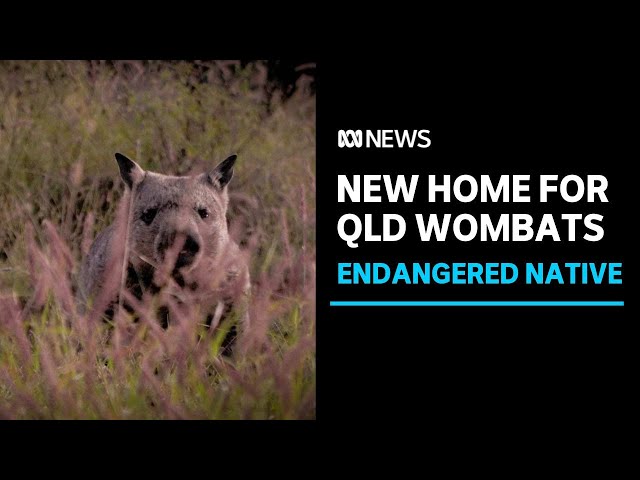
Through the Queensland Government’s dedicated work, the critically endangered northern hairy-nosed wombat—one of the world's rarest mammals—has been brought back from the brink of extinction.
The last northern hairy-nosed wombats lived at Epping Forest National Park (Scientific-Epping), northwest of Clermont in central Queensland. In the 1980s, this population was estimated to be around 35 individuals. After dedicated conservation efforts, it is now estimated to be more than 400 wombats.
In 2009, the Queensland Government established a second colony of northern hairy-nosed wombats at Richard Underwood Nature Refuge near St George in southern Queensland. To promote breeding and maintain genetic diversity, the team periodically adds wombats to the population. In a landmark agreement, the Australian Wildlife Conservancy assumed management of this site in 2023.
Along with Epping and the Richard Underwood Nature Refuge, there is a newly established third site at Powrunna State Forest in south-west Queensland. This third population is identified as a priority goal under the Queensland Government’s Northern Hairy-Nosed Wombat Recovery Action Plan 2022. This action is essential to safeguarding the species from extinction.
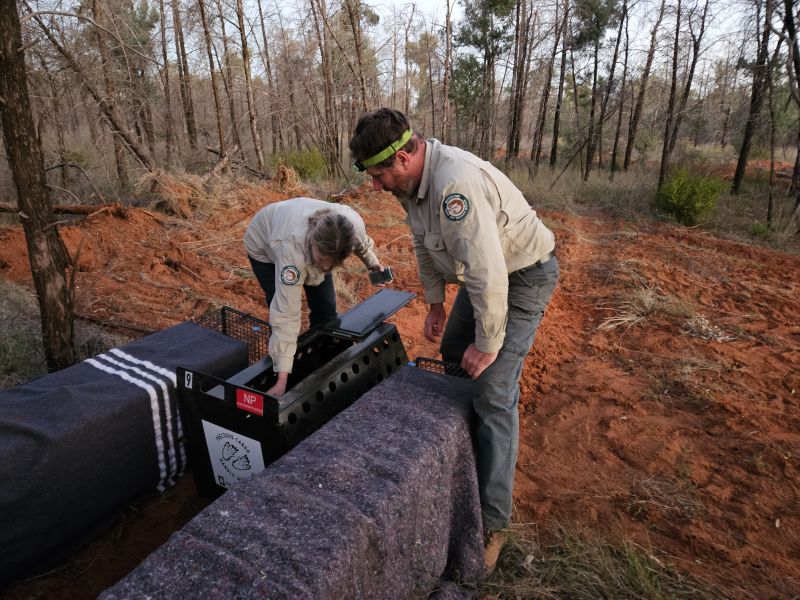
Up to sixty wombats will be gradually translocated to Powrunna over the next few years, providing a suitable founding population that will become self-sustaining in the long term. In 2024, 22 northern hairy-nosed wombats were translocated from Epping to Powrunna and have settled in well. Some of the female wombats have been observed to have young joeys.
Powrunna was chosen after a thorough analysis of potentially suitable sites in Queensland. Northern hairy-nosed wombats require deep sandy soils to dig burrows and a year-round grass supply. On-ground works to prepare the release site included:
- fencing to exclude predators
- providing water points
- using machinery to dig ‘starter burrows’ to give newly translocated wombats initial refuge.
The Department of Environment, Tourism, Science and Innovation leads the Northern Hairy-Nosed Wombat Recovery Program in partnership with key stakeholders:
- The Wombat Foundation
- Australian Wildlife Conservancy
- Gunggari Native Title Aboriginal Corporation and Gunggari Native Title Holders
- Glencore Coal Assets Australia Pty Ltd, which provides significant investment.
Wildlife Officer Tiahna Luke said being involved in the project is exciting. Transporting the precious cargo reminded her how vulnerable the species is.
“I feel honoured to be involved and surrounded by people focused on one species and one goal,” Ms Luke said.
“At Powrunna, we used a radio tracker to find the first female wombat that was translocated, and she’s out there and moving around, which is amazing.”